【36Kr】String-Based Solution Validated for Feasibility and Adaptability in Source-Grid-Side Applications

With the continuous growth of renewable energy installed capacity, the demand from power grids for flexible regulation resources has become increasingly urgent.
Large-scale energy storage power stations are becoming key infrastructure supporting renewable energy consumption and ensuring the safe and stable operation of power systems.
Recently, JDEnergy disclosed the latest operational data of its 500MW/2000MWh energy storage project located in Dukou County, Bayannur City.
This project is JDEnergy’s first GWh-scale standalone project delivered, and also serves as a benchmark for the large-scale application of its flagship Galaxy-1 string-based prefabricated cabin in source-grid-side scenarios.
Since entering commercial operation in January 2026, the power station has maintained stable operation for more than half a year.
Operational data shows that as of the end of June 2026, the power station’s cumulative charging volume had exceeded 400,000MWh, with comprehensive conversion efficiency reaching more than 88.5%.
According to the China Electricity Council’s 2025 energy storage power station operating data, the average comprehensive efficiency of grid-side energy storage was approximately 82.21%.
The project’s efficiency exceeds the industry average by more than six percentage points.
In electricity spot market application scenarios, this efficiency advantage can directly translate into lower electricity costs per kilowatt-hour, thereby improving project profitability.
The Dukou County project has deployed a total of 400 units of Galaxy-1-4G string-based prefabricated cabins and 100 units of eLink-HV35 integrated collector and step-up units.
The project adopts an “All in One” design concept, integrating 314Ah lithium iron phosphate batteries, BMS, string-based PCS, fire protection systems, and thermal management systems into 20-foot containers.
The string-based architecture enables independent management at the battery cluster level, eliminating inter-cluster circulating currents and the “barrel effect” from the source.
The depth of charge and discharge can reach 100%, effectively improving system availability and online availability.
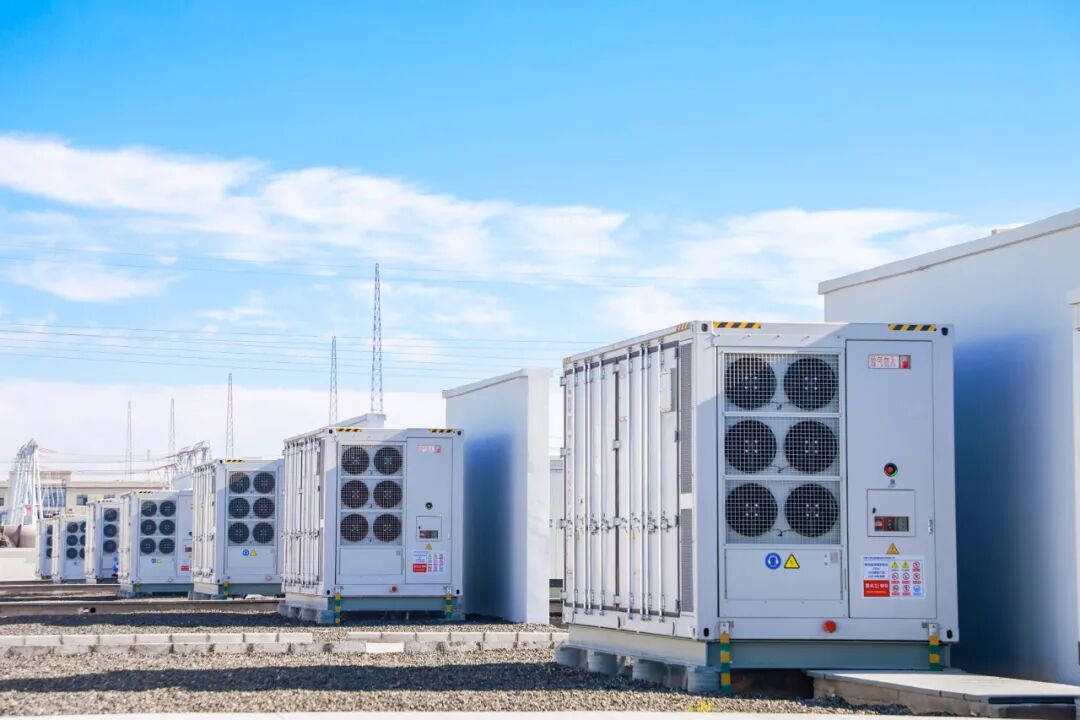
According to reports, during the project construction phase, all equipment delivery was completed within only 60 days, while full-station commissioning and the “three charge-three discharge” verification process were completed within 7 days.
After entering commercial operation, despite the harsh desert environment, the power station has maintained an online availability rate close to 100%, with no unplanned shutdowns caused by equipment failures.
In terms of revenue generation, the power station obtains price-spread revenue by participating in the Inner Mongolia West electricity spot market, while also receiving discharge electricity subsidies.
With the support of JDEnergy’s eTrader intelligent power trading operation platform, the power station can automatically generate multiple bidding strategies for the next-day market and provide AI-recommended solutions.
Its comprehensive operational revenue performance in markets including Inner Mongolia West and Ningxia has remained among the top 10% in the region for an extended period.