【China Energy Storage Network】From Rapid Delivery to Efficient Operation, JDEnergy Reshapes the Value System of GWh-Scale Energy Storage

Introduction: A new powerhouse in the large-scale energy storage sector has officially emerged.
China Energy Storage Network reported that on August 13, 2026, standing at the site of the Inner Mongolia Taiyaoxin 500MW/2000MWh energy storage project, Bai Yi, General Manager of JDEnergy’s Domestic Marketing Division, showed a sense of pride and relief.
One year ago on the same day, this project site located near China’s eighth-largest desert, the Ulan Buh Desert, was covered by yellow sand throughout the year. Today, the first GWh-scale project delivered by JDEnergy has become a benchmark for large-scale energy storage projects in China, achieving nearly 100% online availability, over 88.5% comprehensive efficiency, and operational revenue ranking among the top 10% in the region.
The stable and efficient operation of this power station also means that JDEnergy has successfully entered the core group of large-scale source-grid-side energy storage suppliers.
Industry Transformation:
Source-Grid-Side Independent Energy Storage Enters a “Golden Era”
Since 2025, driven by multiple factors including policy mechanism innovation, the urgent demand for new power system construction, deeper electricity market reforms, and declining costs across the industrial chain, source-grid-side independent energy storage has entered a period of large-scale growth.
With its system value in peak regulation, frequency regulation, smoothing renewable energy output fluctuations, and improving renewable energy consumption capability, independent energy storage has become the primary battlefield for domestic energy storage companies seeking incremental market opportunities.
According to the CESA Energy Storage Application Branch industrial database, China’s newly installed grid-side independent/shared energy storage capacity reached 41.1GW/123.1GWh in 2025, accounting for 70.11% (power) and 70.23% (capacity) of the total market, representing year-on-year growth of 56.23% (power) and 89.89% (capacity).
The rapid expansion of independent energy storage applications has created new challenges for companies’ comprehensive capabilities.
Companies are now required to possess rapid delivery capabilities for GWh-scale large projects, system control technologies compatible with grid dispatch requirements, and intelligent operation systems capable of participating in electricity spot markets.
The success or failure of projects is no longer determined solely by equipment performance, but by competition across the entire lifecycle value chain, including equipment, engineering, and operations.
As one of the provinces with the largest renewable energy installations in China, Inner Mongolia has seen continuous growth in wind and solar capacity.
The large-scale integration of renewable energy has created increasing pressure on peak regulation and renewable energy consumption. Independent energy storage has become a key infrastructure solution for addressing renewable energy curtailment and ensuring safe grid operation in the region.
Through institutional innovation, Inner Mongolia has developed a mature business model combining “discharge volume subsidies + spot market price spreads.”
Independent energy storage facilities participate in the Inner Mongolia West electricity spot market as independent market entities, with clear revenue sources and broad market potential.
Meanwhile, local regulatory requirements continue to improve, placing strict requirements on energy storage power station conversion efficiency, online availability, charging and discharging strategies, and dispatch response capabilities.
Whoever can successfully deliver GWh-scale source-grid-side projects while achieving high efficiency, high availability, and high profitability will secure a position in this high-value energy storage market.
As one of China’s earliest providers of string-based new energy storage systems and the pioneer of distributed intelligent energy blocks, JDEnergy has always firmly followed the string-based technology route.
As early as 2021, JDEnergy had already completed the deployment of grid-side energy storage projects.
With the arrival of the independent energy storage boom, JDEnergy successfully captured this opportunity through its deep technological foundation.
The implementation of the Inner Mongolia Taiyaoxin 500MW/2000MWh energy storage project represents a milestone in JDEnergy’s breakthrough in the GWh-scale source-grid-side energy storage sector.
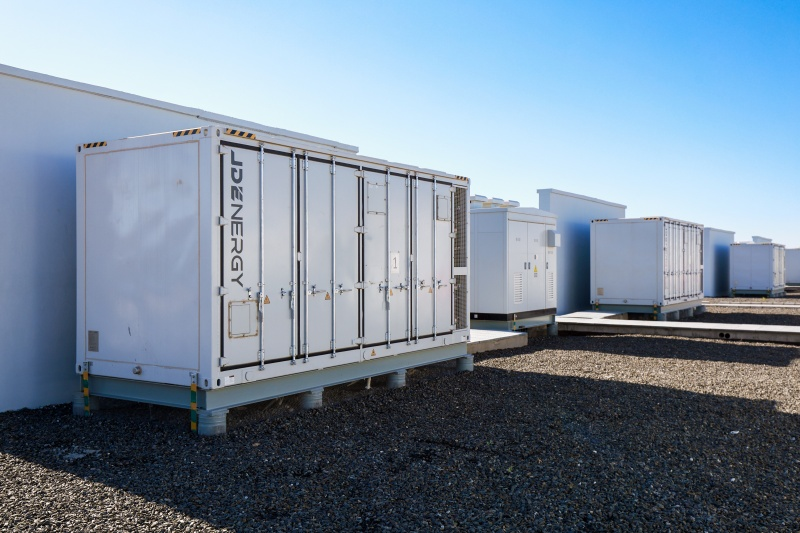
JDEnergy Galaxy-1 String-Based Energy Storage Prefabricated Cabin
Hard-Core Implementation:
Delivering a GWh-Scale Power Station in 90 Days
In December 2025, the Inner Mongolia Dukou 500MW/2000MWh energy storage project was successfully connected to the grid.
The project is equipped with 400 Galaxy-1 string-based energy storage prefabricated cabins and 100 eLink-HV35 integrated collector and step-up units.
It also includes prefabricated primary and secondary power distribution facilities, a newly constructed 220kV step-up substation, and transmission lines connected to the Xiangtai Substation.
The project serves as a key independent energy storage facility supporting regional renewable energy consumption and ensuring stable grid operation.
According to Wang Yangjun, Assistant General Manager of JDEnergy and General Manager of the Engineering Center, as JDEnergy’s first GWh-scale source-grid-side project, the project set a new record for the company’s single-project scale and fully demonstrated its strong engineering coordination and supply chain delivery capabilities.
“Complete equipment delivery was achieved within 60 days, and full-station commissioning and the complete ‘three charge-three discharge’ verification process were completed within only 7 days. This speed has also set a new record for GWh-scale energy storage power station construction in China,” Wang Yangjun said proudly.
As a key hub for transmitting renewable power from major energy bases in Inner Mongolia West, Xinjiang, and Gansu to central and eastern regions, Dukou faces harsh natural conditions and complex grid environments.
These conditions impose extremely strict requirements on the response speed and large-scale parallel operation stability of energy storage systems.
The key factor supporting the successful grid connection of this project is JDEnergy’s core product — Galaxy-1 string-based prefabricated cabin.
Galaxy-1 prefabricated cabin adopts an “All in One” integrated design concept, highly integrating 314Ah lithium iron phosphate batteries, self-developed BMS, string-based PCS, thermal management, fire protection, power distribution, and communication systems into a standard 20-foot container.
It features high efficiency, high safety, and high integration, supports both 2-hour and 4-hour duration configurations, and fully meets the demanding operating conditions of large-capacity source-grid-side energy storage power stations.
The product is equipped with the eLink-HV35 integrated collector and step-up unit, integrating energy chain control, power distribution, and fire protection functions.
With factory pre-integration and an IP54 protection rating, it enables rapid deployment on site and meets the requirements of large-scale independent energy storage projects for equipment reliability, system integration, and rapid construction.
With its outstanding environmental adaptability and operational stability, Galaxy-1 not only provides a solid foundation for Inner Mongolia’s renewable energy landscape but also completes the large-scale deployment of Galaxy-1 string-based prefabricated cabins in source-grid-side independent energy storage applications through this project.
Through the complete hardware product portfolio, JDEnergy has successfully expanded into GWh-scale source-grid-side applications based on string-based technology architecture and the design concepts of “3S integration” and “AC/DC integration.”
Wang Yangjun believes that JDEnergy’s ability to complete the delivery of a GWh-scale power station within an extremely competitive schedule demonstrates the high maturity and engineering advantages of string-based prefabricated cabin technology.
One of the key advantages is that approximately 90% of the construction workload is completed in advance at standardized factories, covering equipment installation, wiring commissioning, system testing, and other processes.
By replacing traditional on-site manual operations with industrialized assembly-line production, JDEnergy has achieved standardized, refined, and large-scale engineering implementation.
Wang Yangjun pointed out that standardized factory production eliminates uncertainties in on-site construction and ensures consistency in the quality and process reliability of every prefabricated cabin.
Meanwhile, on-site construction is simplified into overall cabin lifting, rapid cable connection, and system integration commissioning, making the process as efficient as “assembling building blocks.”
This approach greatly reduces dependence on outdoor weather and environmental conditions, shortening the on-site construction period by more than 40% compared with traditional models and enabling rapid project implementation.
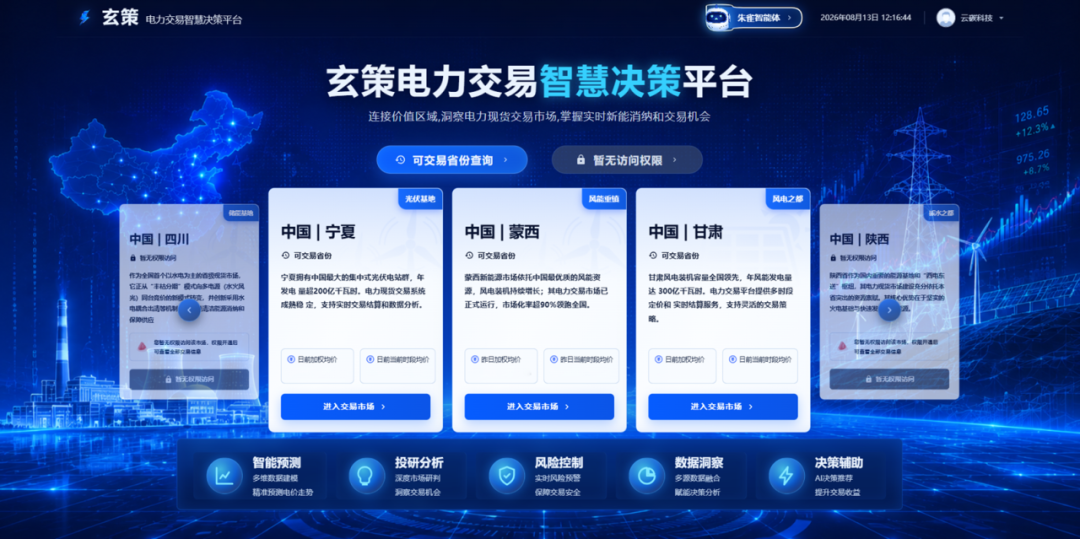
JDEnergy XuanCe Intelligent Power Trading Operation Platform
Operational Report Card:
Multiple Performance Indicators Leading the Industry
Since the Inner Mongolia Dukou 500MW/2000MWh energy storage project began operation, its performance results have remained impressive.
The power station adopts a sawtooth charging and discharging strategy, with a daily cycle rate of 1.3–1.4 cycles. The system online availability remains close to 100%, and operational performance consistently ranks among the top 10% in the region, placing it among the industry’s leading projects.
Among these achievements, the project’s comprehensive conversion efficiency reaches ≥88.5%, significantly exceeding industry levels.
According to 2025 statistics from the China Electricity Council, the average comprehensive efficiency of grid-side energy storage in China was 82.21%, while the industry benchmark level was approximately 85%.
The project exceeds the industry average by 6 percentage points.
This achievement is attributed to JDEnergy’s advantages in system architecture and equipment performance.
The string-based architecture fundamentally avoids inter-cluster circulating currents, eliminates the “barrel effect,” and supports 100% depth of charge and discharge.
Combined with self-developed BMS, full-time balancing strategies, cluster-level independent control topology, and highly efficient thermal management systems, the system maintains optimal battery operating conditions while reducing thermal losses.
Through vector control algorithms, JDEnergy achieves optimal matching between PCS and battery string voltage, reducing PCS losses by 30% and ultimately improving overall system efficiency, directly enhancing asset returns for project owners.
The nearly 100% system online availability is attributed to the project’s adoption of JDEnergy’s 3S (PCS/BMS/EMS) integrated control and protection design.
This architecture builds a comprehensive active safety protection system from individual battery cells to the entire system.
Combined with AI-based health management strategies, it ensures healthy product operation.
According to reports, since commissioning, the project has experienced no fault-related shutdowns or unplanned grid disconnections for more than six months.
JDEnergy’s technological advantages are not limited to hardware.
Software innovation further completes its full-value-chain service and business ecosystem.
Unlike integrators that only provide hardware equipment, JDEnergy uses eMind-Trader as its core software system to build a digital intelligent product ecosystem integrating “investment decision-making, intelligent operation, and smart maintenance.”
This enables energy storage assets to transition from “buildable” to “operable, optimizable, and sustainable.”
It supports the Dukou power station in achieving integrated intelligent operation from grid connection and market participation to independent electricity trading, helping the project maintain operational revenue among the top 10% in the region.
Specifically, relying on the JDEnergy eTrader intelligent power trading operation platform, the system automatically generates multiple bidding strategies for the next-day market and provides AI-recommended solutions.
It captures intraday peak-valley price fluctuation patterns, provides real-time insight into market supply-demand conditions and grid constraints, and supports bidding decisions while reducing risks.
Among them, the ZhuQue Investment Research AI Agent improves project investment calculation efficiency by 10 times.
The XuanCe Trading AI Agent enables operation through dialogue-based interaction.
The eMind energy storage cloud platform uses AI agents to reshape EMS, upgrading it from “passively receiving alarms” to “actively discovering problems,” enabling proactive life-extension maintenance and cell-level health management.
This complete operational capability has been validated through the Inner Mongolia Dukou 500MW/2000MWh energy storage project.
JDEnergy has formed a full-value-chain closed loop covering “system integration, project delivery, and intelligent operation.”
As of today, the total scale of energy storage power stations operated by JDEnergy has exceeded 10GWh.
The outstanding operational performance in multiple regional markets including Inner Mongolia West and Ningxia demonstrates that this operational system has the capability for large-scale replication across different regions.
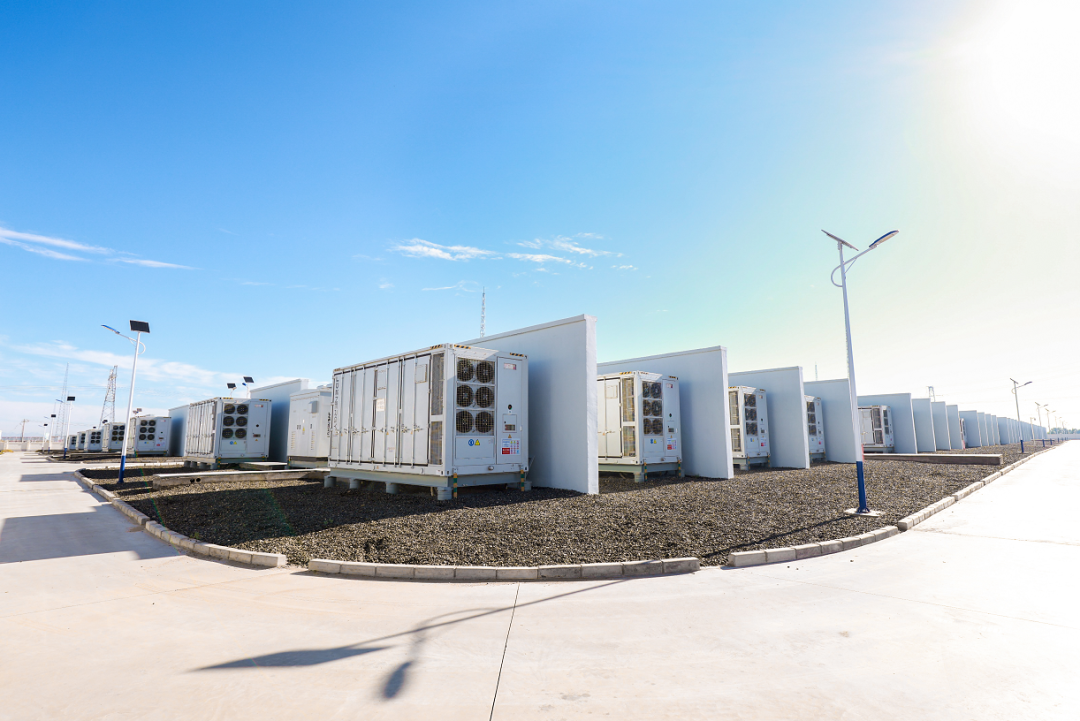
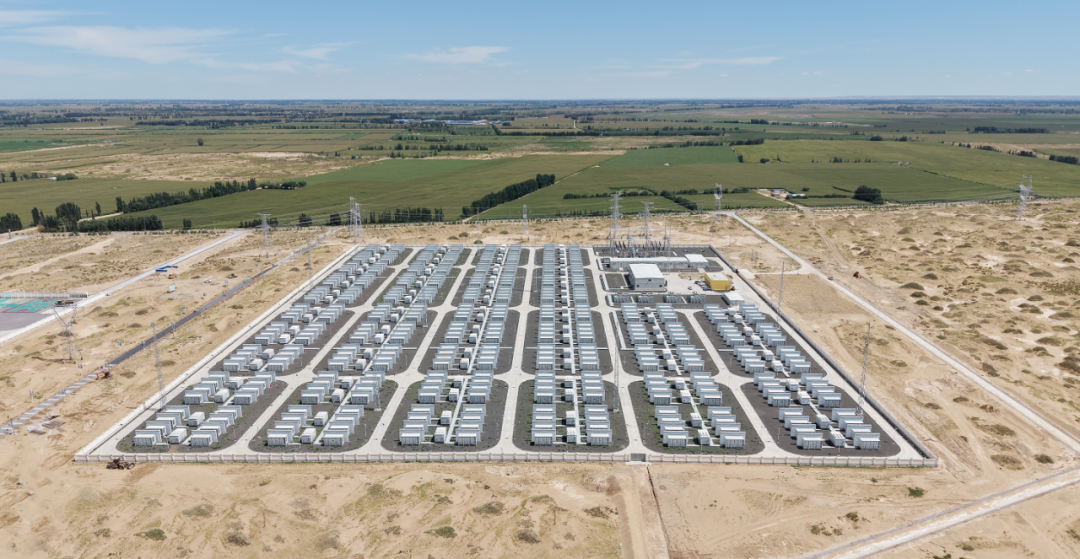
Inner Mongolia Taiyaoxin 500MW/2000MWh Energy Storage Project Site
Milestone:
Entering the Core Supplier Group of Source-Grid-Side Energy Storage
For JDEnergy, the successful construction and stable operation of the Inner Mongolia Dukou 500MW/2000MWh energy storage project carries significant strategic value.
It marks JDEnergy’s transformation from an equipment integrator into a core supplier of source-grid-side energy storage solutions, becoming a key force in the source-grid-side energy storage sector.
From the perspective of industry value, the power station effectively smooths fluctuations in regional wind and solar power generation, improves renewable energy consumption capability, reduces renewable energy curtailment, supports Inner Mongolia’s energy structure transformation, serves the national carbon peak and carbon neutrality strategy, and fully demonstrates the system regulation value of independent energy storage.
From the perspective of enterprise development, the project has enabled the large-scale deployment of JDEnergy’s flagship Galaxy-1 product in source-grid-side independent energy storage applications.
It has verified the technical advantages and engineering capabilities of the string-based technology route in GWh-scale large energy storage power stations.
The efficient delivery capability demonstrated by completing equipment delivery within 60 days and full-station commissioning within 7 days proves that JDEnergy possesses the supply chain capabilities and engineering coordination strength required to undertake GWh-scale large source-grid-side projects.
It has broken through the delivery barriers of GWh-scale single-project implementation.
Nearly 100% online availability, over 88.5% comprehensive efficiency, and regional top 10% operational revenue performance demonstrate that JDEnergy is not only capable of providing hardware solutions but also possesses comprehensive capabilities across grid control, electricity trading, and intelligent maintenance throughout the entire lifecycle of independent energy storage.
JDEnergy has become a high-quality full-lifecycle service provider for source-grid-side energy storage.
In addition, the project has accumulated valuable practical experience for JDEnergy in large-scale source-grid-side project implementation, grid connection coordination, and market-oriented operation.
It provides a replicable benchmark model for future expansion of independent energy storage projects and renewable energy plus storage projects nationwide.
Today, source-grid-side independent energy storage is accelerating its transition from policy-driven growth toward market-driven development.
JDEnergy’s value system is becoming increasingly evident, positioning it as a leading participant in this sector.
This also demonstrates that only companies equipped with core technologies have the ability to successfully implement large-scale source-grid-side energy storage projects and capture opportunities in this rapidly growing market.