【Energy Storage & Power Market】88.5% Efficiency, Top 10% Revenue: JDEnergy’s GWh-Scale String-Based Energy Storage Power Station Sets a Benchmark for the “Second Half” of Energy Storage

In December 2025, Dongkou County, Bayannur City, Inner Mongolia, the Inner Mongolia Taiyaoxin Energy Storage 500MW/2000MWh project, the first GWh-scale energy storage project delivered by JDEnergy, was officially connected to the grid. The project completed all equipment deliveries within only 60 days and completed full-system commissioning and “3 charging and 3 discharging” verification within 7 days. After more than half a year of actual operation, the project achieved a comprehensive efficiency of over 88.5%, nearly 100% system availability, and revenue performance consistently ranking among the top 10% in the West Inner Mongolia market. This outstanding set of operational data has attracted widespread attention from the industry.
However, more noteworthy than the project itself is the transformation of industrial logic reflected behind it. Grid-source-side independent energy storage is accelerating its transition from “policy-driven” development to “market-driven” development. Mandatory renewable energy storage requirements are gradually disappearing, while policy subsidies are declining or even being phased out. A future energy storage revenue model will be jointly built around capacity compensation, electricity market arbitrage, and ancillary service market revenues. During this process, energy storage operation mechanisms are becoming increasingly refined, and the realization of asset value increasingly depends on high system availability, high efficiency, lifecycle Levelized Cost of Storage (LCOS) optimization capabilities, and precise operational strategies.
This value logic represents exactly the core advantage of JDEnergy’s string-based solution in grid-source-side scenarios. From the deployment of its first grid-side string-based energy storage project in 2021 to the commissioning of a GWh-scale grid-source-side string-based energy storage power station in 2025, this system featuring “high efficiency, high availability, and high utilization,” together with the value system created by JDEnergy’s digital intelligence product ecosystem covering “investment decision-making, intelligent operation, and smart maintenance,” has continued to be validated in the grid-source-side market.
As one of the earliest providers in China to develop string-based new energy storage systems, the pioneer of distributed intelligent energy blocks, and the world’s first company to apply distributed intelligent energy blocks in hundred-MWh-scale projects, JDEnergy has remained committed to the string-based technology route. This is not merely to serve a specific market segment, but to return to the fundamental value of energy storage systems: solving the imbalance of energy distribution across time and space, and realizing greater value for energy storage assets.
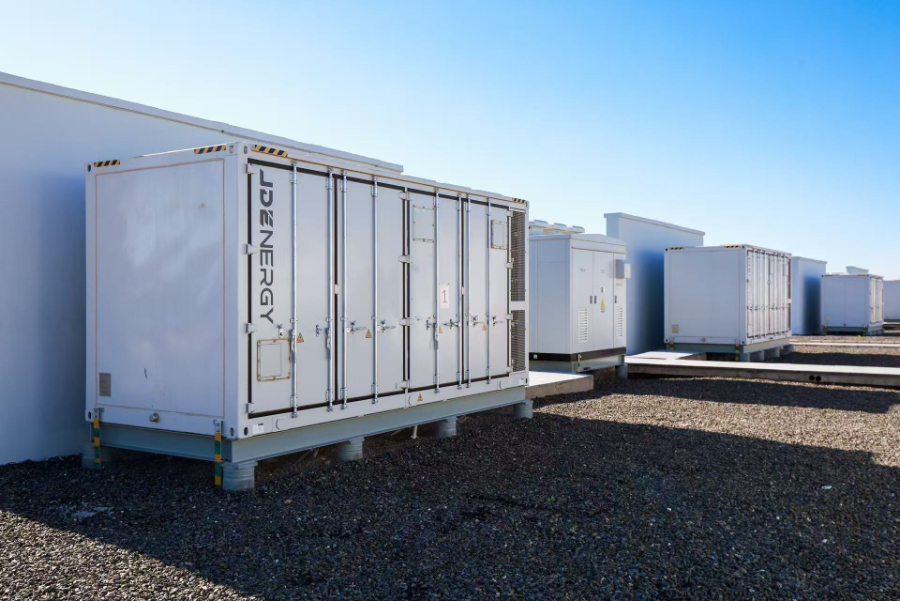
Figure: JDEnergy Galaxy-1 String-Based Prefabricated Cabin
Competing Against Time: String-Based Solution Enables “Factory Pre-Commissioning + On-Site Plug-and-Play,” Delivering a GWh-Scale Power Station Within Three Months and Securing Better Returns
Let us go back to 2025.
In February 2025, the release of “Document No.136” completely disrupted the previous development model of energy storage based on mandatory renewable energy storage allocation. Inner Mongolia responded to this change at the fastest speed.
In March 2025, the Inner Mongolia Energy Administration issued the “Notice on Accelerating the Construction of New Energy Storage” (Inner Energy Electricity Document [2025] No.120). At a critical moment when the industry still faced uncertainties regarding the market-oriented development path of energy storage, the document clarified several key points and became the most important policy support for the subsequent development of independent energy storage in Inner Mongolia:
- Clarified the definition of independent energy storage;
- Confirmed that independent energy storage projects can independently choose to participate in medium- and long-term electricity markets.
The policy established a 10-year discharge subsidy mechanism, with a subsidy standard of RMB 0.35/kWh calculated based on discharge volume and shared by power generation units.
When the document was released, Inner Mongolia had already accumulated 107GWh of independent energy storage projects through two batches of grid-side energy storage demonstration projects and two batches of special initiatives since 2024. The new policy came at the right time — the revenue model combining discharge subsidies and electricity market price arbitrage was established, paving the way for independent energy storage to transition from “policy-driven” to “market-driven” development.
Market activity quickly increased, and enthusiasm for project development was immediately ignited. However, a critical challenge stood before all participants: in order to secure the discharge subsidy revenue that determined project economics, the energy storage power station had to achieve grid connection and operation before December 31, 2025.
The project had to race against time. And JDEnergy won the race.
When the Inner Mongolia Taiyaoxin Energy Storage 500MW/2000MWh project started construction, Dongkou had already entered deep winter. Under extreme cold conditions of below minus 20 degrees Celsius, the construction window on site was compressed to the limit. Building and commissioning a GWh-scale energy storage power station within the shortest possible time under such harsh natural conditions represented the ultimate test of project design and delivery capabilities.
Ultimately, 400 units of Galaxy-1 string-based prefabricated cabins and 100 units of eLink-HV35 collector and step-up integrated machines completed all equipment deliveries within only 60 days, and completed full-system commissioning and “3 charging and 3 discharging” verification within 7 days. A delivery model completely different from traditional centralized solutions played a critical role.
Galaxy-1 adopts an “All in One” design concept, integrating 314Ah battery cells, BMS, string-based PCS, fire protection, thermal management, and other systems into a 20-foot container, with pre-commissioning completed before leaving the factory. The combination of 400 Galaxy-1 units and 100 eLink-HV35 units enabled rapid “plug-and-play” deployment at the Dongkou site. This also represents the success of a mature supply chain system and standardized product design.
During the intensive deployment period of energy storage projects in Inner Mongolia at the end of 2025, this delivery speed enabled the project owner to complete grid connection before the critical window when discharge subsidies declined from RMB 0.35/kWh to RMB 0.28/kWh, securing more favorable compensation prices. Based on 1.4 cycles per day, 88.5% comprehensive efficiency, 100% depth of discharge (DOD), and 330 operating days per year, this factor alone is estimated to generate approximately RMB 60 million in additional annual discharge subsidy revenue.
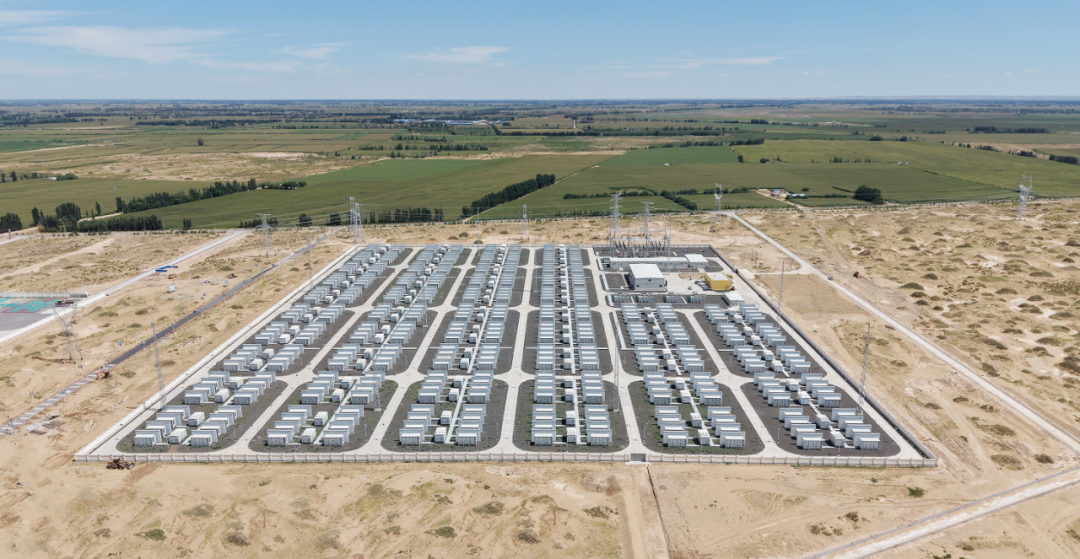
Figure: Inner Mongolia Taiyaoxin Energy Storage Power Station Site
Pursuing Returns from Equipment: Comprehensive Efficiency >88.5%, Nearly 100% System Availability, Hardware Capabilities Increase Revenue Potential
Under the revenue model of independent energy storage projects in Inner Mongolia, every factor is closely related to how much electricity the energy storage power station can discharge.
The discharge subsidy of RMB 0.35/kWh means that the more electricity discharged, the higher the revenue.
For charge-discharge price arbitrage revenue, under the same price difference conditions, lower losses mean more electricity can be discharged and higher returns can be achieved.
Likewise, during the same year of operation, higher availability means longer operating time, more electricity delivered, and greater revenue generation.
Efficiency and annual equipment availability have undoubtedly become key factors restricting projects from achieving higher returns. Since commissioning, the Taiyaoxin Energy Storage 500MW/2000MWh project has achieved a comprehensive efficiency of over 88.5% and nearly 100% system availability, maximizing the power station’s ability to generate higher returns.
The project’s 88.5% system comprehensive efficiency is 6.29 percentage points higher than the 82.21% average comprehensive efficiency of grid-side energy storage projects reported by the China Electricity Council (2025 Energy Storage Power Station Operation Statistics). Based on 1.4 cycles per day and 330 operating days per year, the combination of charge-discharge price arbitrage revenue and discharge subsidy revenue provides project owners with approximately RMB 30 million in additional annual revenue.
A comprehensive efficiency exceeding 88.5% is the most significant advantage brought by JDEnergy’s string-based solution. Meanwhile, the combination of zero circulating current and 100% depth of charge and discharge fundamentally eliminates the “barrel effect.” Each of the 400 Galaxy-1 units contains six battery clusters, and each cluster can be independently controlled. Compared with centralized solutions, the string-based architecture effectively avoids circulating currents between clusters and minimizes the barrel effect, enabling 100% depth of charge and discharge.
Cluster-level independent control combined with vector algorithms maximizes the value of every kilowatt-hour. Meanwhile, JDEnergy’s independently developed BMS, together with full-time balancing, cluster-level independent control, and efficient thermal management, ensures that battery cells remain in optimal operating conditions. Vector control algorithms combined with optimal voltage fitting reduce PCS losses by 30%, ultimately delivering a significant improvement in comprehensive efficiency and increasing project owner returns.
It is worth noting that since the project entered commercial operation in January 2026, it has maintained nearly 100% availability, enabling the energy storage asset to remain “online at all times and generate revenue whenever needed.” JDEnergy’s 3S (PCS/BMS/EMS) integrated control and protection design, combined with AI-based health management, has established an active safety barrier from battery cells to the entire system. During the first six months of operation, the project recorded zero unplanned grid disconnections, maintained continuous grid-connected operation, responded to dispatch requirements at any time, continued generating revenue, and significantly reduced operation and maintenance costs. Against the backdrop of increasingly stringent requirements for energy storage charging and discharging responses in electricity markets, nearly 100% availability means higher dispatch priority and more certain revenue realization capabilities.
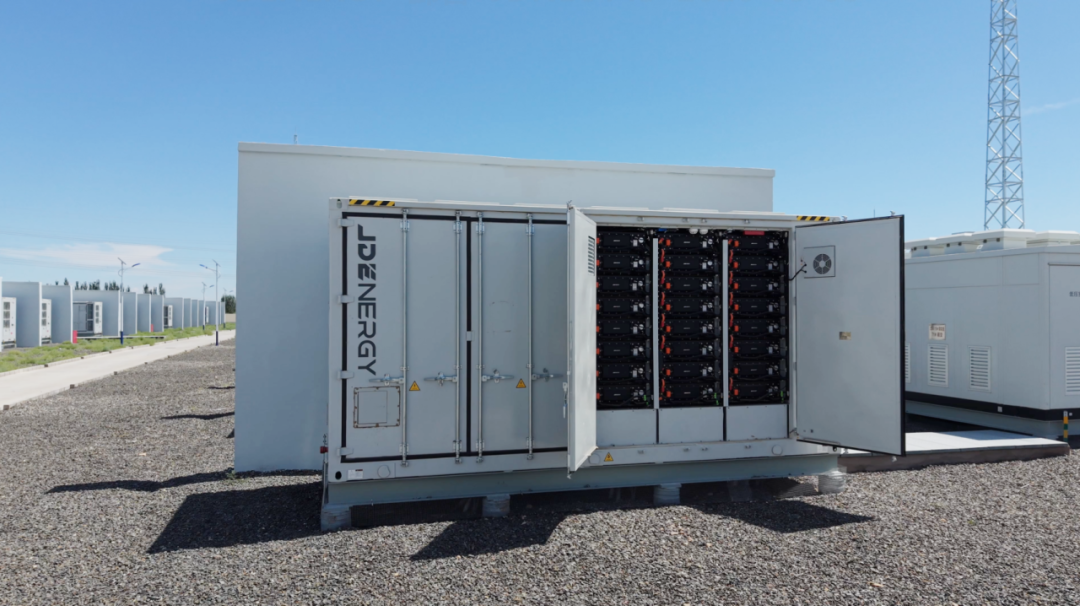
Figure: Interior of JDEnergy Galaxy-1 String-Based Prefabricated Cabin
Competing in the Market with Strategies: AI Operators Achieve Precise Market Positioning in the West Inner Mongolia Spot Electricity Market
The high returns of the Dongkou energy storage power station come half from hardware performance and half from software intelligence.
In the spot electricity market environment, electricity price fluctuations represent both operational risks and profit opportunities for energy storage power stations. In the West Inner Mongolia electricity spot market, the Taiyaoxin Energy Storage Power Station adopts a zigzag charging and discharging strategy, accurately capturing electricity prices and policy limits. It has achieved an average of 1.3–1.4 cycles per day, with revenue performance consistently ranking among the top 10% in the West Inner Mongolia market.
Supporting this precise operation is JDEnergy’s digital intelligence product ecosystem built around market-oriented operation as its core and intelligent capabilities as its driving force. The system integrates three key capabilities: “investment decision-making, intelligent operation, and smart maintenance.” It enables energy storage assets to evolve from being merely “buildable” to becoming “operable, optimizable, and sustainable.”
Zhuque Investment Research AI Agent (Investment Decision-Making):
Provides an independent calculation engine (Zhuque Xinghe), a data asset engine (Zhuque Xunlongtu), and an operational insight engine. It replaces traditional manual Excel modeling and reduces the time required from project calculation to report generation from 2 days to only 2 hours.
Xuance Trading AI Agent (Intelligent Operation):
Based on the eTrader 2.0 platform, it uses multi-agent orchestration (forecasting — strategy — bidding — review — settlement) to achieve “conversation-based operation.” RPA-based automatic bidding connects the entire workflow into a closed loop, enabling every kilowatt-hour to have a winning strategy.
eMind Energy Storage Cloud Platform (Smart Maintenance):
Uses AI agents to reshape EMS capabilities, upgrading from “passively receiving alarms” to “actively discovering problems,” enabling proactive life-extension maintenance and cell-level health management.
JDEnergy has completed a comprehensive closed loop for energy storage power stations, covering grid connection, market participation, and autonomous participation in electricity trading. It has achieved full value-chain integration from system integration and project delivery to intelligent operation. In an era when grid-source-side energy storage is transitioning from “policy-driven” to “market-driven,” this “operable, optimizable, and sustainable” digital intelligent operation system is becoming a core engine for increasing the value of energy storage assets.
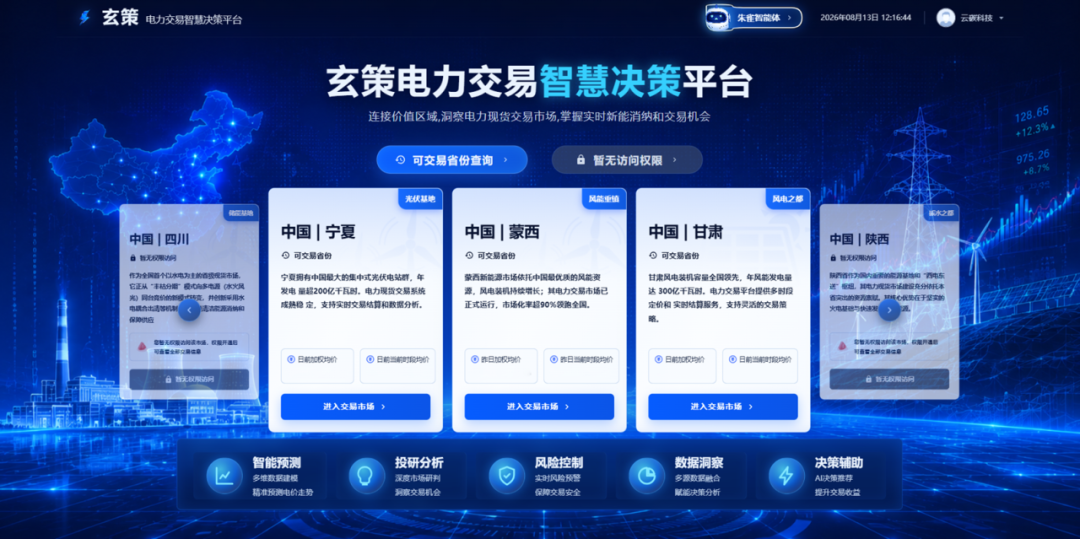
Figure: Xuance Electricity Trading Intelligent Decision-Making Platform
More Than Just the Second Half of Energy Storage in Inner Mongolia: A New Competition from Equipment to Operation Has Just Begun
The benchmark significance of the Dongkou project extends far beyond Inner Mongolia.
Looking back at the development trajectory of China’s energy storage industry, two distinct stages can be clearly identified. The first half was an “equipment competition” era — whoever achieved higher energy density, lower cost per watt-hour, and more competitive bidding prices gained an advantage in the race for market expansion. In August 2025, during Mengneng’s 5.2GWh energy storage system procurement, 25 companies competed in the bidding process, with several companies offering prices below RMB 0.4/Wh.
This serves as a vivid example of this stage.
However, the policy direction changed in 2026. “Document No.114” established guaranteed capacity compensation revenue for independent energy storage projects. Nearly 30 regional electricity spot markets have officially entered operation or continuous trial operation, making participation in electricity spot markets and obtaining price arbitrage revenue one of the major revenue sources for independent energy storage. Meanwhile, frequency regulation ancillary service markets in Guangdong, Guangxi, Guizhou, Shanxi, Shandong, Jilin, Liaoning, and other regions have opened to energy storage, marking the arrival of a multi-revenue era for energy storage.
The era when “installation alone could generate profits” has come to an end. Energy storage power stations are transitioning from “grid connection equals revenue” toward “operation determines success or failure.” The core drivers determining asset value are shifting from initial equipment procurement costs toward lifecycle cost per kilowatt-hour and the ability to capture operational revenue.
Who can truly help project owners “calculate the economics accurately and generate profits”? This has become the core challenge for the second half of the energy storage market. And this is exactly where JDEnergy demonstrates its differentiation.
What JDEnergy delivers to project owners is never merely individual prefabricated cabins, but rather a full value-chain closed-loop capability covering system integration through intelligent operation. The Inner Mongolia Taiyaoxin Energy Storage Power Station is only one representative example. In Ningxia, operational data from 10 energy storage power stations over 17 consecutive months shows that Tongli Second Energy Storage Power Station, adopting JDEnergy’s string-based solution, has comprehensively outperformed centralized energy storage power stations in terms of charging and discharging volume, system efficiency, equipment availability, and other key indicators (Review of Three Years of Independent Energy Storage in Ningxia: String-Based Energy Storage Leading the Value Competition Track of Independent Storage).
This is not accidental. While the industry was still competing on equipment prices, JDEnergy has already used continuously leading operational data to redefine the value benchmark of energy storage assets. True competitiveness has never been determined at the moment of bidding, but rather through every day after the power station enters operation and every kilowatt-hour involved in market competition:
Higher availability ensures dispatch response capability and continuous revenue generation;
Higher utilization reduces lifecycle cost per kilowatt-hour;
Higher system efficiency amplifies the trading value of every kilowatt-hour;
Smarter operational strategies accurately capture every market opportunity.
These four capabilities form the core competitive barriers that enable energy storage power stations to succeed in market-oriented competition. JDEnergy’s long-term practices across multiple markets, including West Inner Mongolia and Ningxia, have already demonstrated the replicability of these capabilities through solid operational data.
When the first half of the energy storage industry reached its conclusion with “equipment delivery,” the starting gun for the second half has already been fired. From equipment to operation, from construction to asset management, JDEnergy has taken the lead and is becoming an indispensable core force in grid-source-side energy storage applications.