Delivery · Efficiency · Revenue: Three-Dimensional Breakthroughs, JDEnergy’s Dengkou Project Sets a New Benchmark for Independent Energy Storage

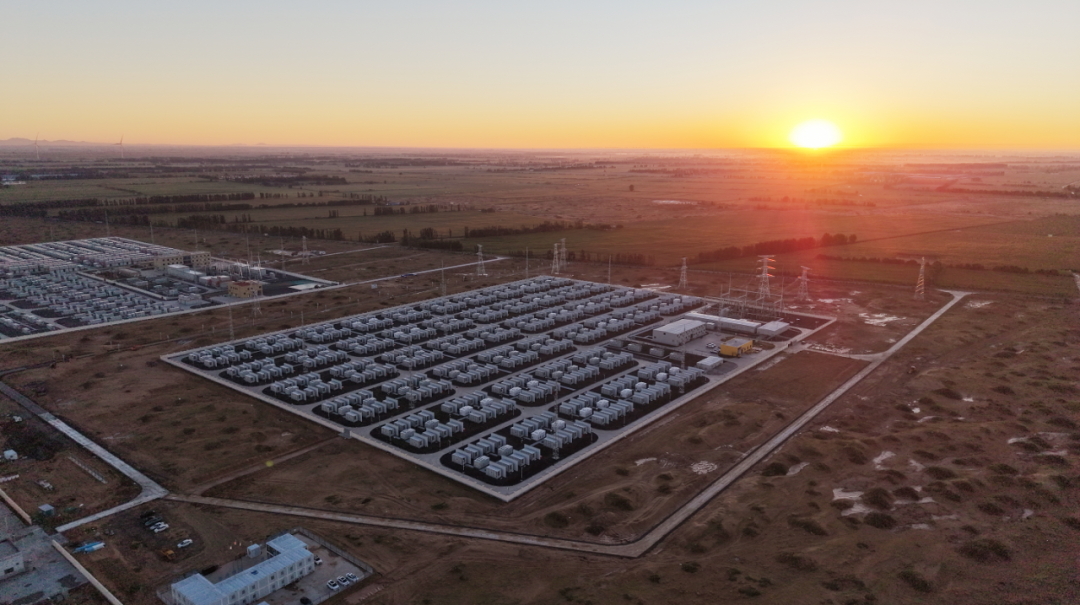
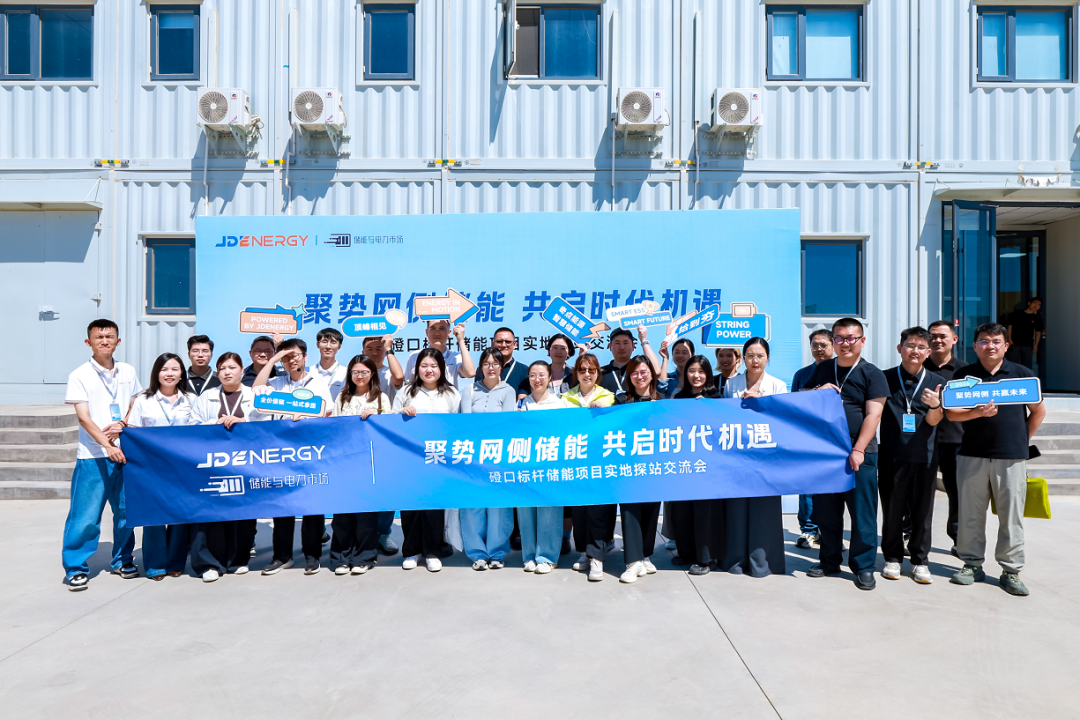
On August 13, JDEnergy invited media representatives and key customers to Dengkou County, Bayannur, Inner Mongolia, for an on-site project tour and exchange event themed around “letting real-world evidence speak for itself,” bringing together professionals from the energy storage and electricity markets. Amid the desert landscape, the 500MW/2000MWh Taiyaoxin Energy Storage Power Station responded to the industry’s questions about the delivery, efficiency, and revenue performance of GWh-scale energy storage projects with a set of hard data.
01.
90-Day Rapid Delivery:
Redefining the Construction Model for Large-Scale Energy Storage
The Taiyaoxin 500MW/2000MWh Energy Storage Power Station is equipped with 400 Galaxy-1 string-based prefabricated cabins and 100 eLink-HV35 integrated collector and step-up units supplied by JDEnergy. The project is also equipped with prefabricated primary and secondary power distribution facilities, a newly built 220kV step-up substation, and one transmission line connected to the Xiangtai Substation.
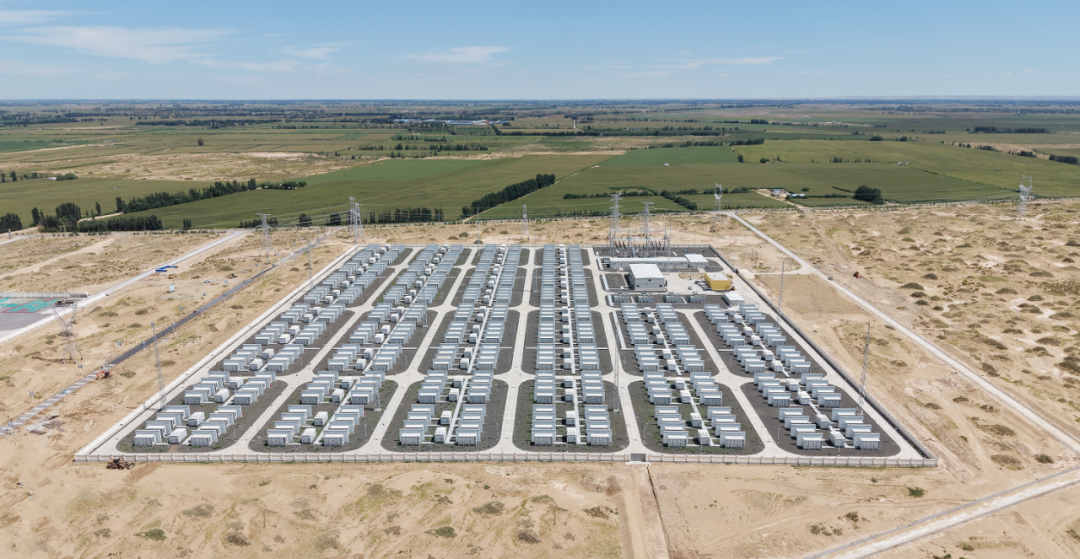
As the first GWh-scale project delivered by JDEnergy, the project achieved an industry-leading delivery milestone: the entire project was completed and fully grid-connected in just 90 days from site preparation to full-capacity grid connection. Among these milestones, all project equipment was delivered within just 60 days, while full-station commissioning and the “3 charge + 3 discharge” verification were completed efficiently in only 7 days.
This rapid delivery was enabled by JDEnergy’s core strengths in productized engineering, standardized processes, and integrated construction. The project’s core Galaxy-1 string-based prefabricated cabins adopt an “All in One” integrated design, incorporating 314Ah battery cells, BMS, string-based PCS, fire protection, thermal management, and other systems into standard 20-foot containers. Factory acceptance testing and pre-commissioning are completed at JDEnergy’s intelligent manufacturing base in Xi’an, leaving only lifting, connection, and simplified wiring work to be completed on site—much like “assembling building blocks.” Overall construction efficiency is improved by more than 40% compared with traditional approaches.
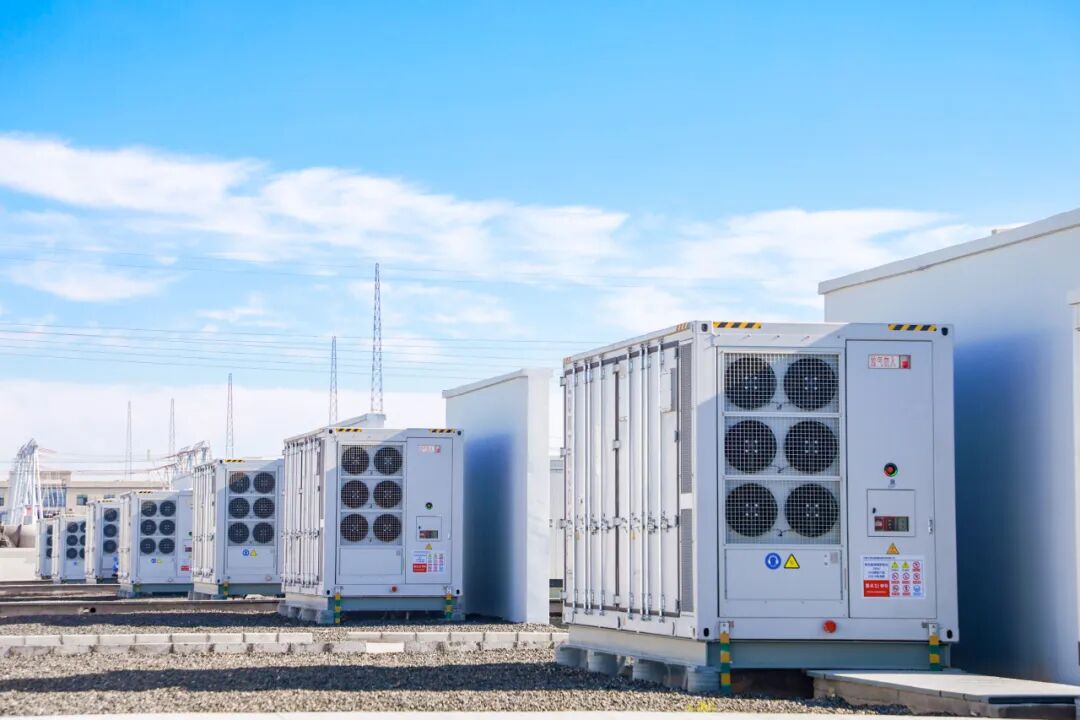
At the same time, the project adopted an innovative lightweight construction method using pile foundations and steel platforms instead of traditional cast-in-place concrete, avoiding the long construction cycles and high costs associated with conventional civil works. Multiple workstreams were advanced in parallel, with equipment lifting, civil construction, phased commissioning, and safety inspections progressing simultaneously. A dedicated project team coordinated schedule, quality, and safety management throughout the entire process.
The 90-day rapid delivery not only fully demonstrated JDEnergy’s capabilities in coordinating large-scale energy storage projects, manufacturing, and engineering execution, but also provided a replicable engineering model for the efficient construction of GWh-scale energy storage projects nationwide.
02.
88.5% System Efficiency
Building the Technical Foundation for Station Value
Delivery speed is only the starting point for project implementation; system performance is the true test of an energy storage asset’s value. As of the end of June 2026, the power station had accumulated 405,900 MWh of charging and 359,200 MWh of discharging, with comprehensive conversion efficiency exceeding 88.5% and a system online rate approaching 100%, delivering a strong performance record.
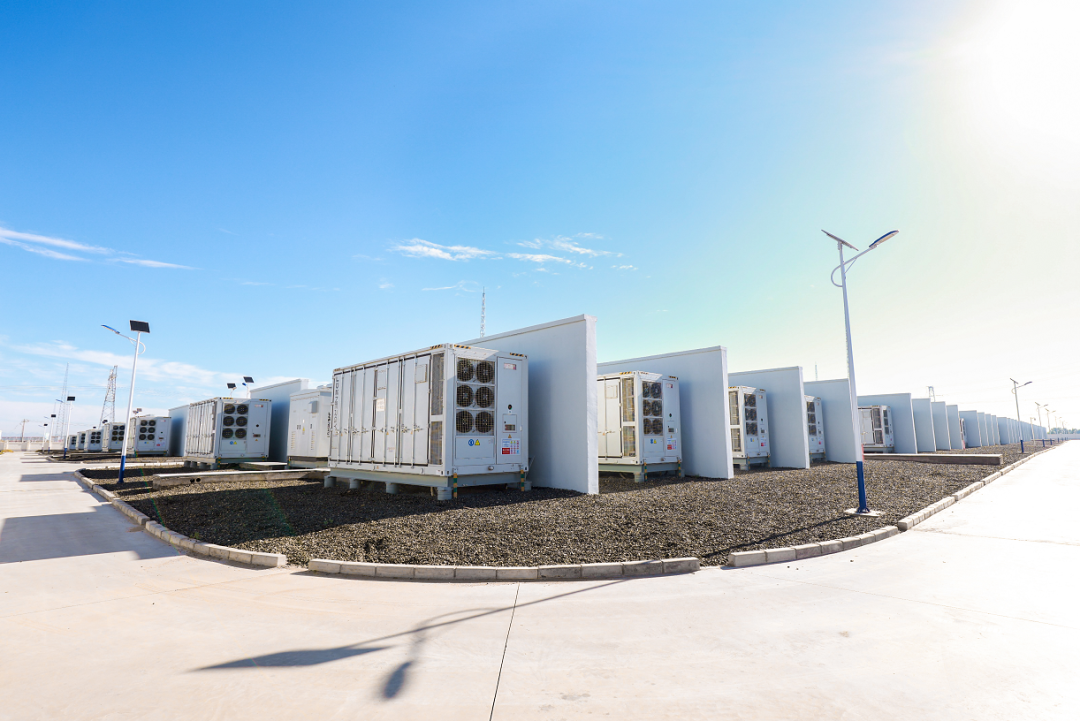
According to China Electricity Council statistics on energy storage power station operations in 2025, the average comprehensive efficiency of grid-side energy storage in China was 82.21%. By comparison, the Taiyaoxin Energy Storage Power Station achieved comprehensive efficiency of over 88.5%, exceeding the industry average by 6.29 percentage points. Assuming 1.4 cycles per day, 330 operating days per year, and a combination of peak-valley electricity price spreads and discharge subsidies, this could generate approximately RMB 30 million in additional annual revenue for the owner.
High comprehensive efficiency is not the result of a single technological innovation, but of the coordinated optimization of system architecture, thermal management, and control algorithms. The project adopts a string-based energy storage architecture, dividing the power station into multiple independent energy storage units. This effectively avoids inter-cluster circulating currents and eliminates the “barrel effect” associated with traditional centralized energy storage, enabling 100% depth of charge and discharge. Supported by JDEnergy’s self-developed BMS, full-time balancing strategy, cluster-level independent control topology, and high-efficiency thermal management, the battery cells can remain within an appropriate operating environment, reducing thermal losses. Meanwhile, vector control algorithms combined with optimal matching between the PCS and voltage reduce PCS losses by 30%, ultimately delivering a significant improvement in overall system efficiency.
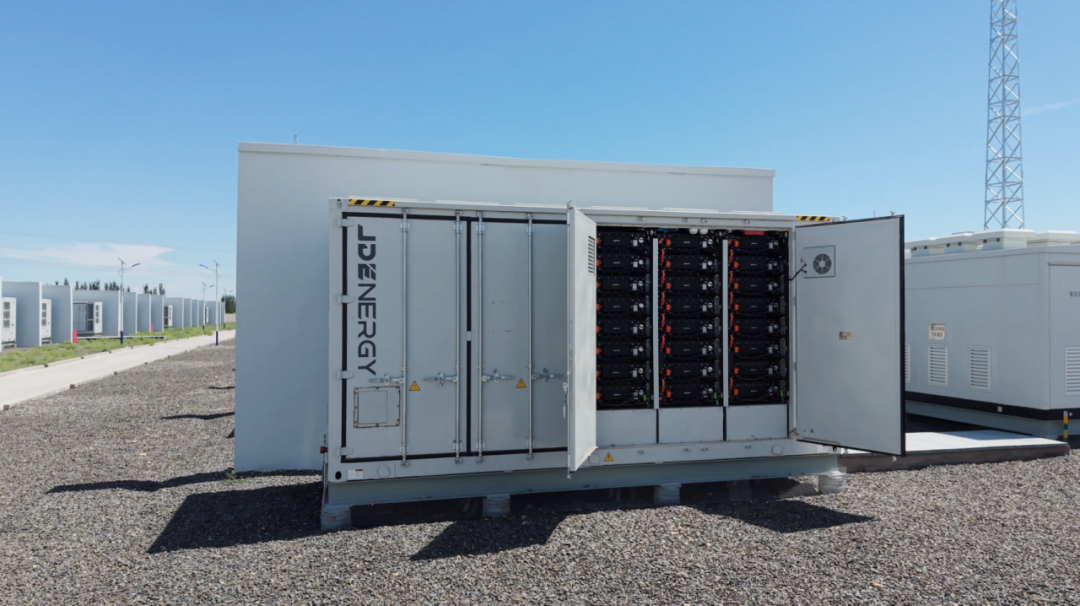
The high online rate is also supported by the 3S (PCS/BMS/EMS) integrated control-and-protection architecture and AI-based health management. A comprehensive, proactive safety system has been established from the cell level to the system level to maintain product health and operational stability. During the more than six months since commissioning, the project has experienced no grid disconnection caused by equipment faults, maintenance, or unplanned outages. The station can respond to grid dispatch instructions at any time, ensuring continuous asset revenue generation while significantly reducing O&M costs.
03.
Revenue Ranking in the Top 10% Regionally:
Unlocking the Business Value of Independent Energy Storage
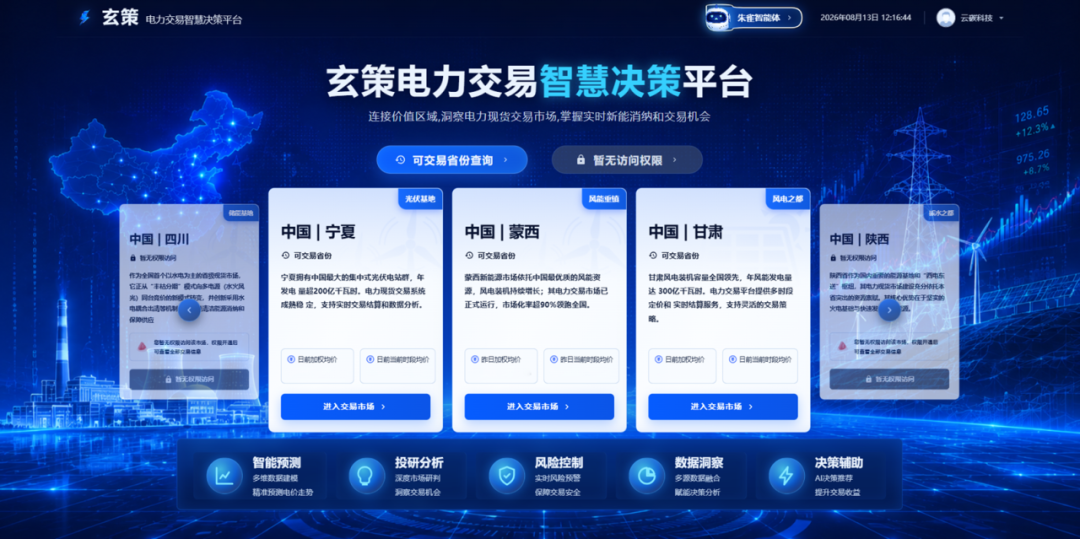
System performance determines the fundamental foundation of an energy storage asset, while intelligent operation determines its revenue ceiling. Powered by JDEnergy’s eTrader intelligent electricity trading and operations platform, the power station automatically generates multiple bidding strategies for the next-day market and provides AI-recommended solutions. It captures fluctuations in intraday peak-valley price spreads, monitors market supply and demand as well as grid constraints in real time, and supports bidding decisions while mitigating risks.
With intelligent and refined operations, the Taiyaoxin Energy Storage Power Station adopts a sawtooth charging and discharging strategy and operates at 1.3–1.4 cycles per day. Its revenue ranking has remained in the top 10% in the region over the long term, demonstrating leading operational capabilities within the industry.
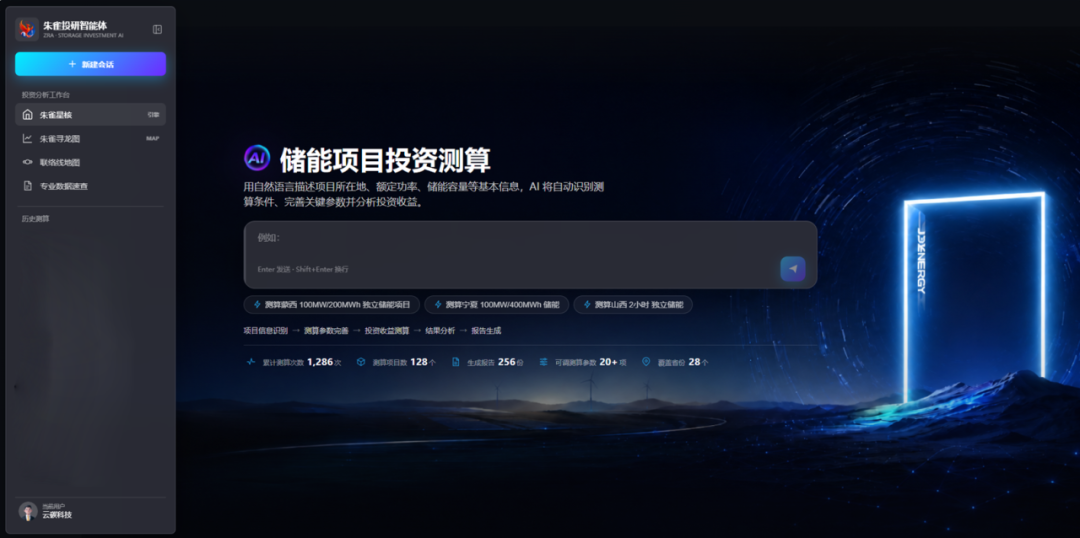
Focusing on the entire lifecycle of energy storage assets, JDEnergy has built a digital and intelligent product system integrating “investment decision-making–intelligent operations–smart O&M,” with market-oriented operations at its core and intelligent capabilities as its engine. This enables energy storage assets to evolve from being merely “buildable” to being “operable, optimizable, and sustainable.”
Zhuque Investment Research AI Agent (Investment Decision-Making): Provides an independent modeling engine (Zhuque Xinghe), a data asset engine (Zhuque Xunlongtu), and an operational insight engine, replacing manual Excel modeling and shortening the time required to complete a single-project assessment and generate a report from two days to two hours.
Xuance Trading AI Agent (Intelligent Operations): Built on the eTrader 2.0 platform, multi-agent orchestration across forecasting, strategy, bidding, review, and settlement enables “operation through dialogue.” RPA automated bidding connects the entire process into a closed loop, helping ensure that every kilowatt-hour has a winning strategy.
eMind Energy Storage Cloud Platform (Smart O&M): Uses AI agents to reshape EMS, upgrading from “passively receiving alarms” to “actively identifying problems,” enabling proactive life-extension O&M and cell-level health management.
04.
Media Spotlight:
Sparking In-Depth Industry Reflection
The on-site project tour and exchange event attracted nearly 20 media organizations, including central media, industry-focused media, financial media, and provincial-level media. The media delegation conducted in-depth research and interviews focusing on project engineering delivery, system performance, operating revenue, and technology routes, subsequently publishing multiple articles and video reports. These reports centered on the power station’s real operating data and generated broad attention both within and beyond the industry.
Among them, an “economic calculation” conducted by Energy Storage and Electricity Market was particularly noteworthy: during the rush to install energy storage projects in Inner Mongolia at the end of 2025, this delivery speed enabled the owner to achieve grid connection before the key window for the phase-down of discharge subsidies—from RMB 0.35/kWh to RMB 0.28/kWh—thereby securing a more favorable compensation rate. Based on 1.4 cycles per day, comprehensive efficiency of 88.5%, 100% depth of discharge (DOD), and 330 operating days per year, this alone is expected to generate approximately RMB 60 million in additional annual discharge subsidy revenue.
An opinion published by Economic Observer News accurately captured the trend of industry transformation: for investors, this means that Inner Mongolia’s independent energy storage market is gradually evolving from a business primarily focused on calculating compensation standards into one that requires simultaneous consideration of compensation, grid nodes, electricity prices, and operational capabilities.
The series of reports generated by the media coverage sparked extensive discussion around delivery speed, system efficiency, and operational revenue, encouraging the industry to reassess the full-lifecycle value of energy storage assets.
05.
Benchmark Value:
Building a Practical Model for Source-Grid-Side Energy Storage
The Taiyaoxin Energy Storage Power Station is not only the first GWh-scale energy storage project delivered by JDEnergy, but also a large-scale engineering demonstration of the string-based energy storage technology route in the GWh-scale independent energy storage scenario. Its benchmark significance lies not only in its installed capacity, but also in its reflection of three dimensions: engineering delivery, technology validation, and market-oriented operations.
From the engineering perspective, the project fully demonstrates that the “factory prefabrication + rapid on-site installation” model is well suited to GWh-scale source-grid-side energy storage construction, providing a replicable practical solution for large-scale energy storage projects supporting renewable energy bases in desert, Gobi, and desertified areas to accelerate construction and capture favorable policy windows.
From the technology perspective, the project demonstrates the feasibility of large-scale deployment of the string-based technology route in large source-grid-side scenarios. As one of the early companies in China to focus on string-based energy storage technology, JDEnergy has remained committed to this technology route. Its flagship Galaxy-1 string-based prefabricated cabin has operated stably in harsh cold and high-wind-and-sand environments, with system efficiency exceeding 88.5% and an online rate approaching 100%, fully demonstrating the application value and large-scale potential of string-based energy storage.
From the operations perspective, the project has established a full-value-chain loop covering “system integration–project delivery–intelligent operations,” providing a new approach to achieving long-term, stable returns from energy storage assets.
Questioning energy storage amid the desert, Dengkou provides the answer. The Taiyaoxin Energy Storage Power Station has delivered a “2GWh desert, Gobi, and desertified-area answer sheet” backed by real on-site data. Rapid delivery, high system efficiency, and intelligent operations have emerged as key drivers for the high-quality deployment of large-scale energy storage. The engineering, technological, and operational methodologies developed through the project will provide practical reference for unlocking the value of energy storage assets and help the industry move beyond a simple competition for scale toward high-quality growth in asset value.