AI Enters the Game: How Can Standalone Energy Storage “Make Every Kilowatt-Hour Count”?


01.
Risks Are Transmitted Layer by Layer
Operational Capability Is the Key
Standalone energy storage projects generally face six major investment risks: uncertainty in revenue sources, deviations in site selection and grid nodes, fluctuations in equipment availability, differences in operational performance, insufficient backstop guarantees, and the ability of guarantors to fulfill their obligations. These risks do not exist in isolation. Instead, they are transmitted layer by layer, ultimately reflected in deviations in project IRR.
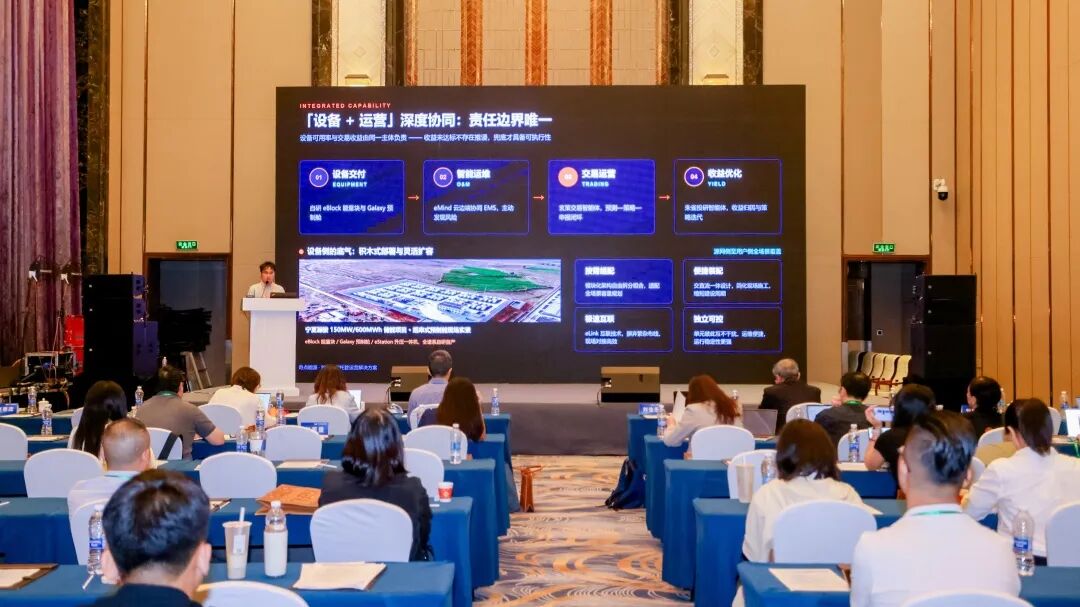
When these risks are transmitted to the financing side, they become an even more fundamental challenge: revenue uncertainty cannot be effectively priced by financial institutions. What project owners need is not simply a promise to “guarantee returns,” but a sufficiently long guarantee period, a sufficiently substantial commitment, and a sufficiently strong guarantor. This means that operators must possess five core capabilities simultaneously: trading, software, forecasting, capital, and brand strength. JDEnergy adopts a dual-engine approach combining “products + operations,” integrating all five capabilities to turn revenue guarantees from a promise into an executable closed-loop of responsibility.
02.
AI-Powered Multi-Agent Intelligence
Making Energy Storage Assets “Operable · Sustainable”
JDEnergy integrates AI agent technology throughout the full lifecycle of energy storage assets, embedding it deeply into three core scenarios: investment decision-making, power trading, and intelligent operation and maintenance. This has resulted in a digital product ecosystem centered around Zhuque Investment Decision-Making, Xuance Power Trading, and eMind Intelligent O&M. At the event, Zhao Weiliang provided a detailed introduction to the “job functions” of multiple AI agents:
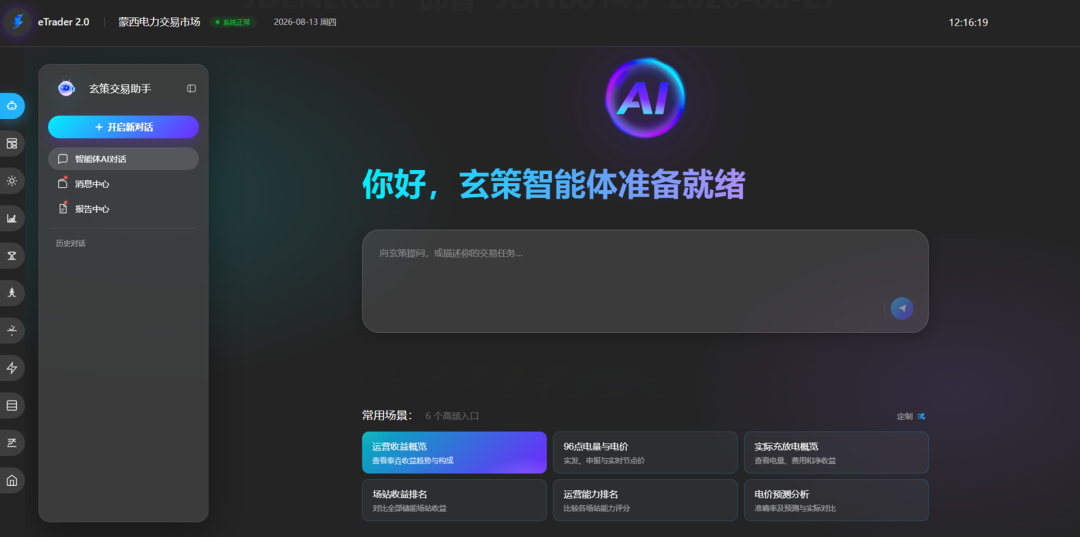
Xuance – Conversational Hub: The system’s central brain and entry point, enabling “conversation as operation.” It coordinates collaboration among sub-agents for forecasting, strategy development, execution, and review. The entire chain of reasoning is visualized, while every basis and conclusion can be traced.
Xuanniao – Strategy Generation: Automatically generates multiple bidding strategies for the following day based on market conditions, while providing an AI-recommended strategy together with revenue calculations and risk alerts. After trader review, the strategy can be submitted with one click.
Honghu – Bid Execution: PRA replaces manual data entry. From pre-market preparation to result feedback, the entire process is visible, with immediate alerts for abnormalities. It enables concurrent management of multiple sites and achieves zero-error bid submission.
Lingxi – Electricity Price Forecasting: Generates electricity price forecast curves at 15-minute intervals, providing real-time insights into market supply and demand as well as grid constraints. It captures intraday peak-to-valley price movements and supports quotation decisions while mitigating risks.
Pixiu – Site-Side Monitoring: Driven by an edge-based cell model, it upgrades operations from “passively receiving alerts” to “actively identifying problems.” It enables battery cell life extension and 3D unmanned inspections, reducing the need for on-site O&M personnel.
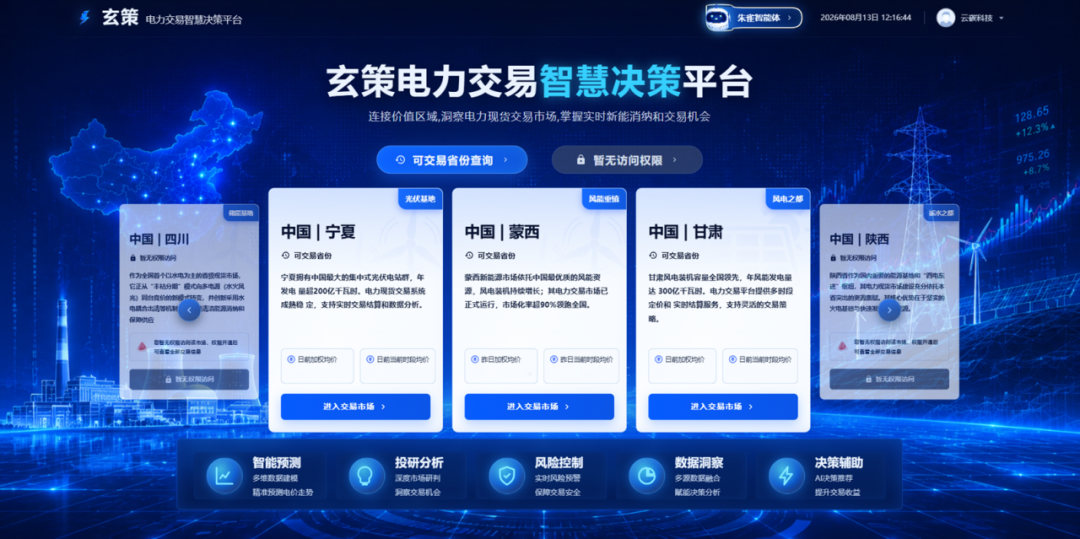
If equipment availability is the denominator of returns, then trading capability is the numerator. Only when equipment and operations are entrusted to the same company can returns truly be measured, optimized, and guaranteed.
03.
Let the Data Speak
Operational Strength Is Continuously Being Validated
The Inner Mongolia Taiyaoxinchu 500MW/2000MWh energy storage power station, supported by JDEnergy’s eTrader intelligent power trading and operations platform, has become a highly recognized benchmark for energy storage operations. After more than six months of operation, the project ranked among the top 10% in the region in terms of overall returns.
To date, JDEnergy’s cumulative operated energy storage capacity has exceeded 10GWh, with its revenue performance consistently ranking among the industry’s leading levels across multiple regions, including Ningxia and Inner Mongolia.
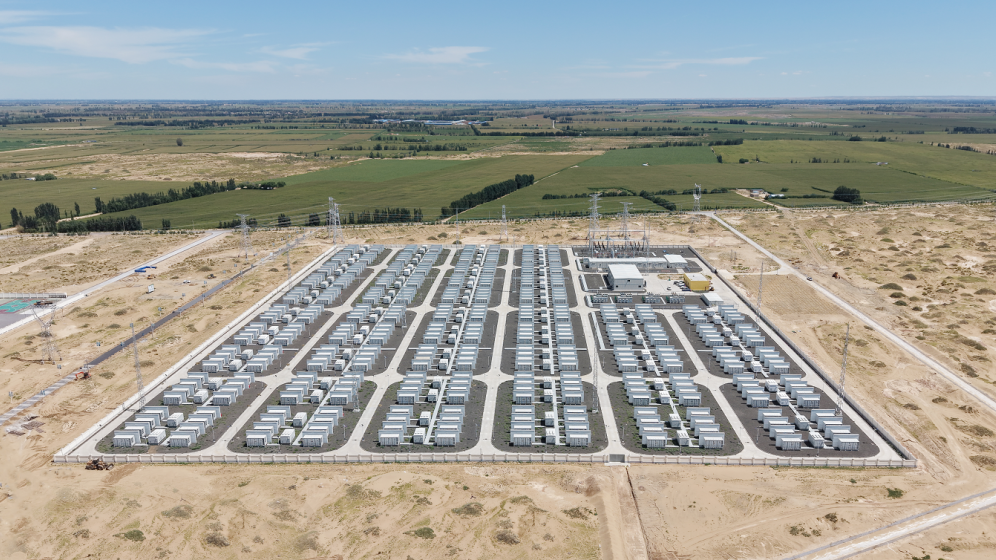
The first half of the standalone energy storage journey was a competition in construction speed; the second half is a competition in operational precision. As electricity spot markets transition from pilot programs to regular operation, only reliable equipment combined with professional operations can “make every kilowatt-hour count” and enable energy storage assets to evolve from being merely “buildable” to being “operable · optimizable · sustainable.”