【Century Energy Storage】A New Energy Storage Landmark in the Desert: Visiting JDEnergy’s 500MW/2000MWh Dukou Project

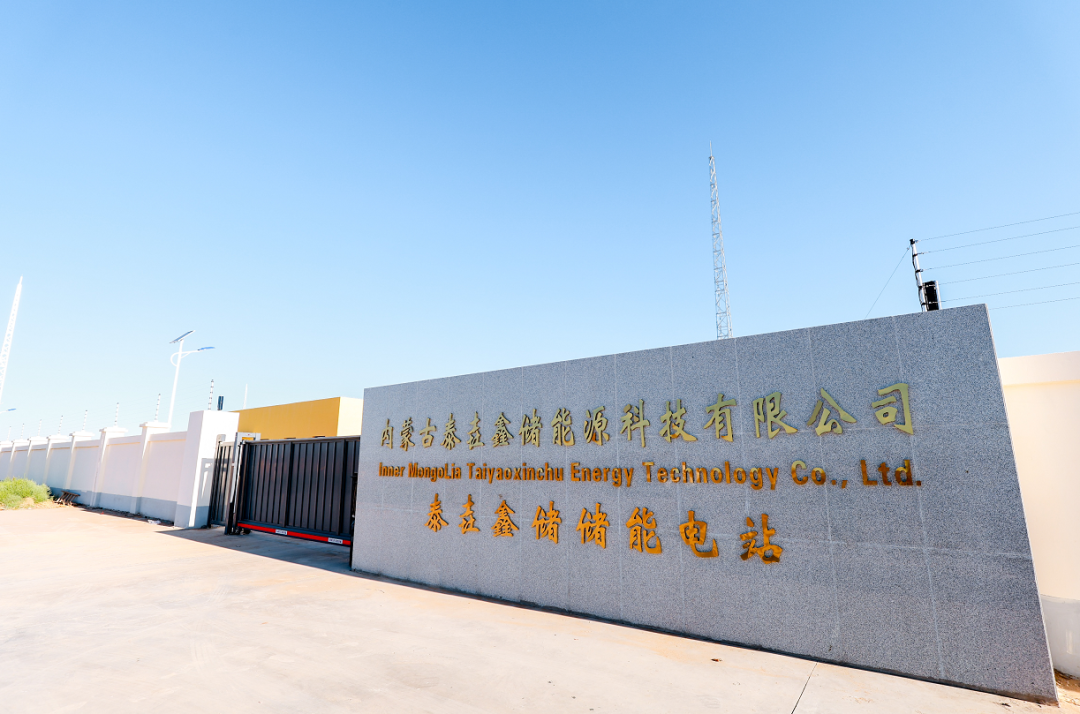
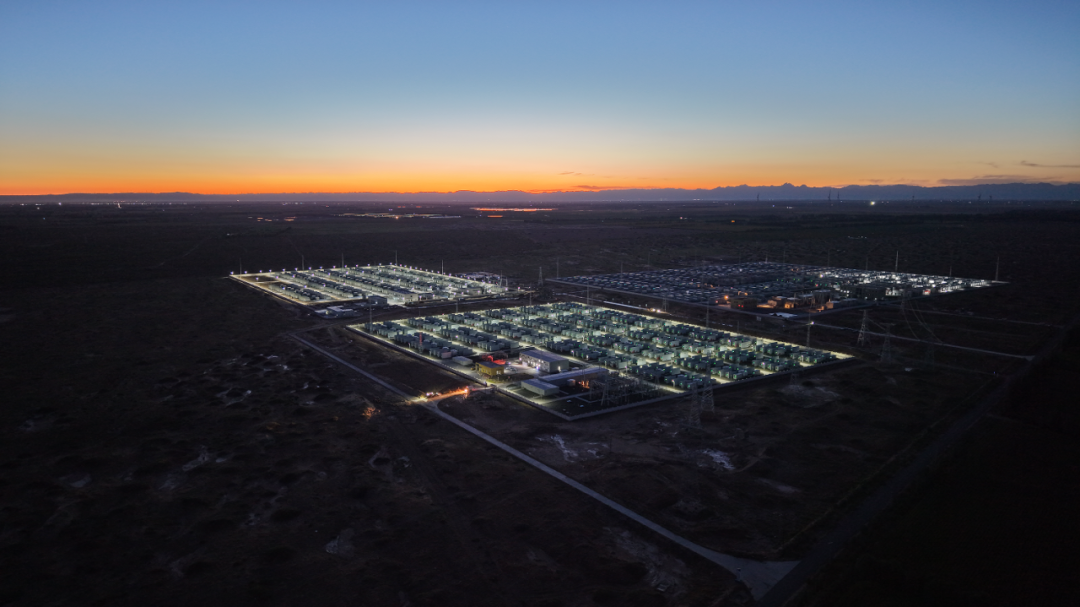
In August, Dukou, Inner Mongolia, is blessed with clear skies and expansive horizons. Departing from Wuhai, we headed north along the Beijing–Tibet Expressway. Gradually, the scenery outside the window transitioned from the bustle of the city to the vastness of the desert. About an hour and a half later, rows of neatly arranged white energy storage containers came into view. This is the site of the Inner Mongolia Taiyaoxin Energy Storage 500MW/2000MWh Energy Storage Power Station, JDEnergy’s first GWh-scale project.
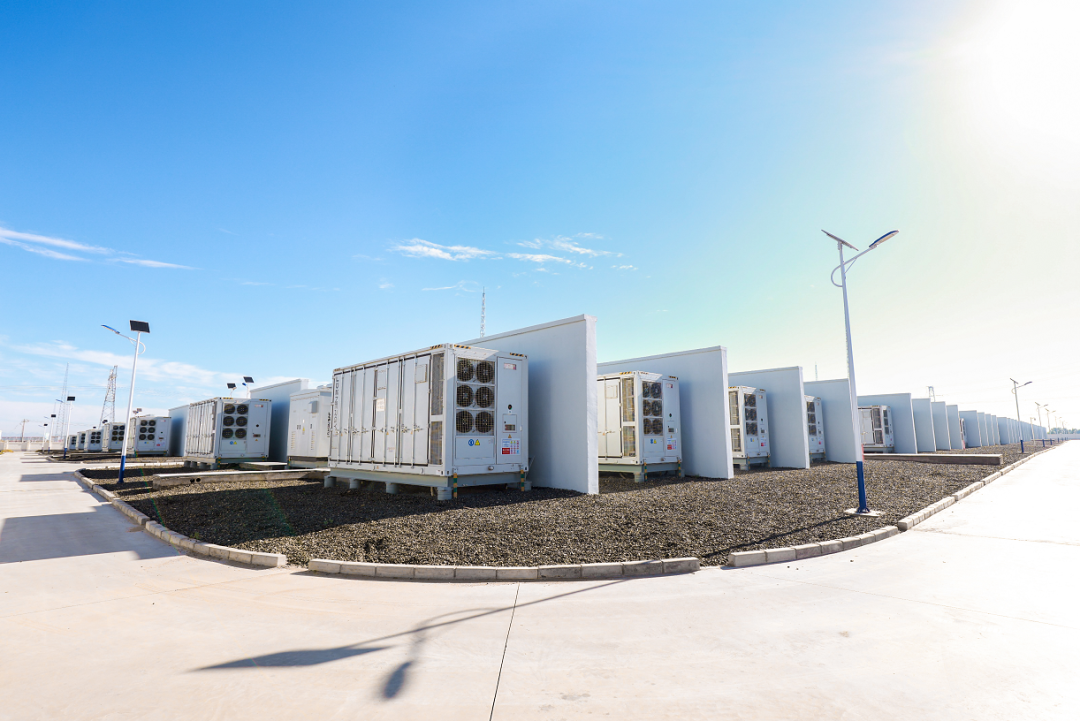
Stepping into the power station, 400 Galaxy-1 string-based prefabricated energy storage cabins and 100 eLink-HV35 integrated collector and step-up units reflect the sunlight. Without a reminder from the staff, it would be hard to imagine that this vast energy storage matrix completed delivery of all equipment in just 60 days, followed by efficient completion of full-station commissioning and the “three charge-three discharge” verification process in only seven days.
As one of the most representative independent energy storage benchmark projects in the industry, the Dukou power station has not only set a new record for the scale of a single project delivered by JDEnergy, but has also demonstrated its value through a series of impressive figures: a comprehensive efficiency of more than 88.5%, approximately six percentage points higher than the industry average; a system online rate of 100%; and monthly revenue ranking consistently among the top 10 in the Inner Mongolia West market since commercial operation began.
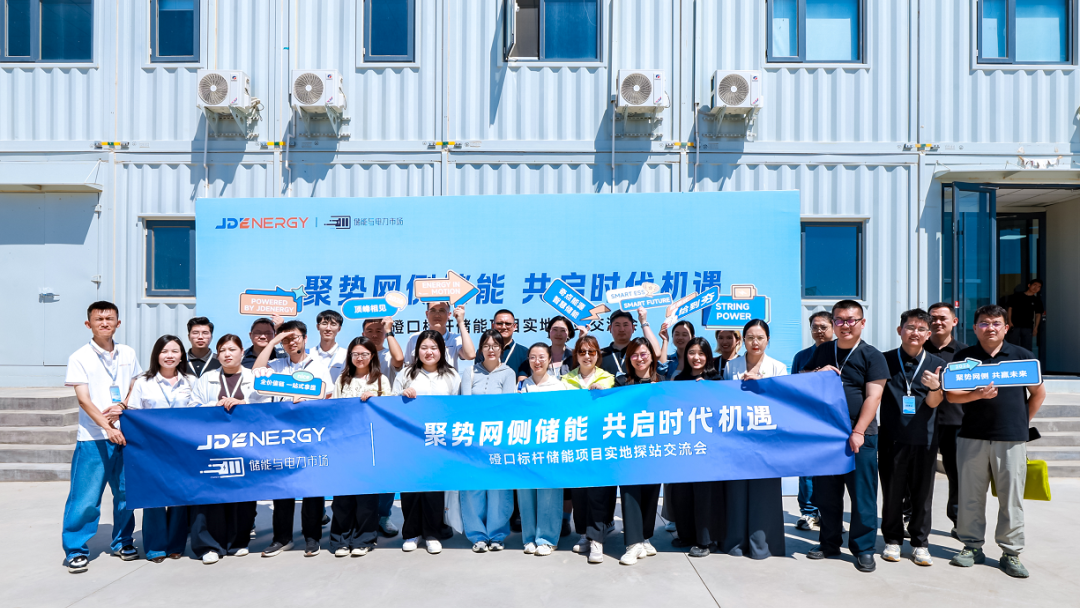
What do these numbers actually mean? With these questions in mind, the reporter followed the “Aggregating Grid-Side Energy Storage, Unlocking New Opportunities” Dukou benchmark project field visit and exchange event, stepping inside this “super power bank” in the desert to find out.
Part 01
The Engineering Logic Behind Rapid Delivery and Grid Connection
For the energy storage industry, the ability to deliver large-scale projects is often a key differentiator of a company’s capabilities. The Dukou project is located in Dukou County, Bayannur City, Inner Mongolia. With a total capacity of 500MW/2000MWh, the project consists of 400 string-based prefabricated energy storage cabins and 100 integrated collector and step-up units. It also includes the construction of a new 220kV step-up substation, which is connected to the Xiangtai Substation through a single transmission line.
All project equipment was delivered in just 60 days, while full-station commissioning and the “three charge-three discharge” verification process were completed in only seven days. This pace has attracted considerable attention across the industry.
Wang Yangjun, Assistant General Manager of JDEnergy and General Manager of the Engineering Center, revealed the answer behind this remarkable speed at a closed-door exchange session. “By moving a large portion of traditional on-site work forward to the factory, we have truly achieved ‘engineering as a product,’” Wang Yangjun said. JDEnergy adheres to the concept of “engineering as a product.” Before leaving the factory, every piece of equipment undergoes complete charge-discharge testing and system integration commissioning. Thanks to the integrated AC/DC design, the PCS and battery clusters have already completed coordination and verification before leaving the factory. At the project site, only lifting, wiring, and simple communication point-to-point checks remain.
In traditional centralized energy storage projects, battery systems and PCS units are usually delivered separately. Wiring, communication link testing, and full-station commissioning still need to be completed on site. Any problem in between can extend the construction schedule. Li Chen, Deputy General Manager of the Marketing Division of JDEnergy, offered an analogy: “It’s like we’ve already cooked the meal in the factory. At the site, all that’s left is to heat it up and put it on the plate.”
Construction of the Dukou project took place during the harsh winter in Inner Mongolia. Temperatures below minus 20 degrees Celsius made conventional concrete pouring and curing extremely difficult. In response, the project team adopted a string-based energy storage architecture from the design stage, dividing the entire power station into multiple independent energy storage units. All structural supports, components, and electrical equipment were prefabricated and pre-assembled at the factory, while on-site installation was carried out much like assembling building blocks, eliminating the need for cast-in-place concrete work. This design also enabled the foundations to use prefabricated pipe piles instead of cast-in-place concrete foundations, further reducing on-site construction time. Ultimately, the project achieved efficient delivery even under extremely cold conditions.
Part 02
How the String-Based Solution Achieved 88.5% Comprehensive Efficiency
One of the key indicators of power station operation is comprehensive efficiency. According to 2025 energy storage power station operating data from the China Electricity Council, the average comprehensive efficiency of grid-side energy storage was 82.21%, while the Dukou power station achieved more than 88.5%. For a large-scale power station with a capacity of 2000MWh, an additional six percentage points translates into tens of millions of kilowatt-hours of additional tradable electricity each year.
This figure is no coincidence. Since its establishment in 2018, JDEnergy has remained committed to the string-based technology route, including in the large-scale energy storage market. The core logic of the string-based architecture is “one cluster, one management system”: each battery cluster is connected to an independent PCS channel, avoiding the “barrel effect” and circulating current losses caused by DC-side parallel connections, thereby enabling 100% deep charge and discharge.
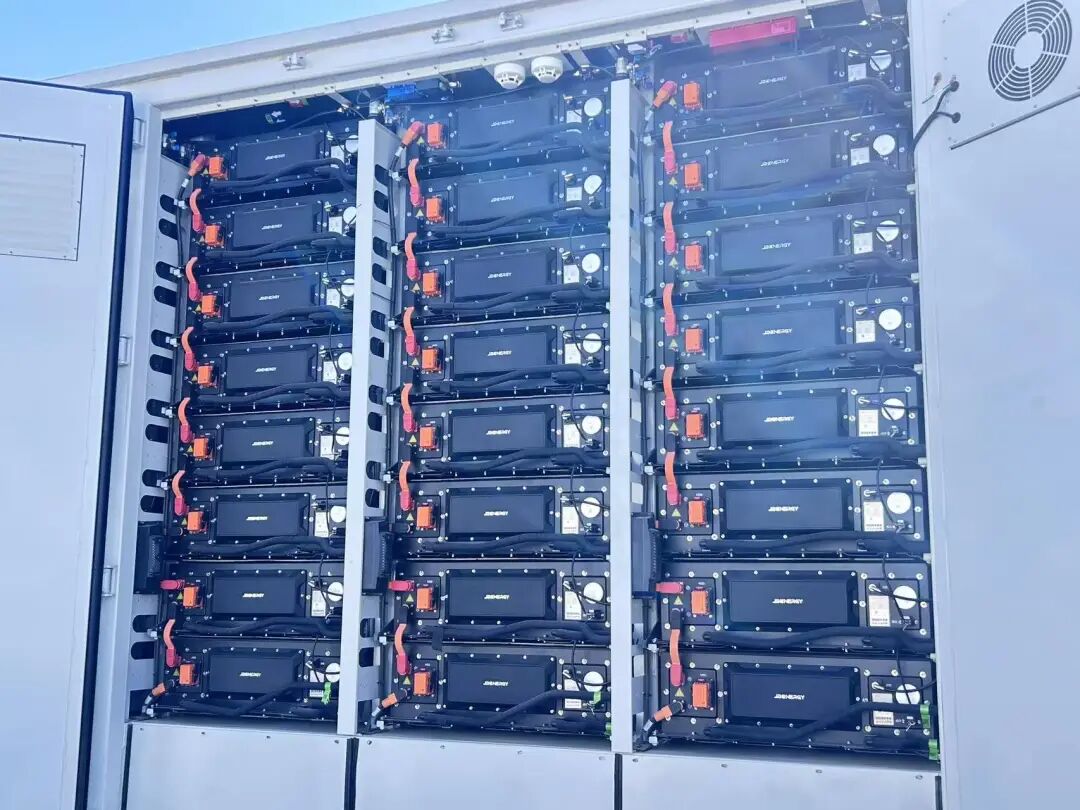
Inside the energy storage cabin, the reporter saw how this design is implemented. Galaxy-1 adopts an “All-in-One” concept, integrating 314Ah lithium iron phosphate batteries, BMS, string-based PCS, and liquid cooling thermal management into a standard 20-foot container. Each cabin is equipped with three dual-channel PCS units, with each channel rated at 215kW and corresponding to a battery cluster with a capacity of 836kWh, forming a four-hour energy storage system. Six battery clusters are distributed in the upper section of the cabin, while the PCS units are cleverly integrated into the lower section, making full use of the available container space.
“Many people ask why we designed the PCS in an elongated shape instead of a square shape.” Li Chen pointed to the equipment at the bottom of the cabin and explained, “To fit the 2,438-millimeter depth of the container, we elongated the PCS so that we could make maximum use of the available space without wasting functional areas. The structural design of the PCS is also a reflection of JDEnergy’s full-stack in-house R&D capabilities. Even with a 5,000kWh energy storage container, JDEnergy’s Galaxy equipment integrates the PCS while maintaining the standard 20-foot container dimensions.”
The liquid cooling system is another important factor contributing to efficiency improvements. Notably, Galaxy-1 adopts a dual-channel liquid cooling design. The battery system and PCS share one liquid cooling unit but use separate liquid cooling pipelines. This is because the battery system and PCS have different heat-generation characteristics and different requirements for inlet and outlet water temperatures. Independent channels allow the cooling efficiency of each system to be optimized separately, reducing thermal losses. At the same time, JDEnergy uses its self-developed vector control algorithm to reduce PCS switching losses by approximately 30%. Combined with optimal matching between the PCS and battery string voltage, these technologies ultimately improve overall system efficiency.
Part 03
A 100% Online Rate and the Digital Intelligence Behind the Scenes
If high conversion efficiency represents hard-core technical capabilities, then a 100% system online rate is more indicative of soft capabilities. On the main control room’s large display, the reporter saw all 400 energy storage cabins showing green online status.
Li Chen explained that since the project entered commercial operation in January 2026, apart from scheduled maintenance, there had been no unplanned disconnection caused by equipment faults. “The revenue of an energy storage power station comes from every charge and discharge cycle. If the system fails at a critical moment, the loss is not limited to that single trading opportunity. It can also affect the grid’s confidence in the power station.”
The foundation of this reliability is JDEnergy’s full-stack self-developed 3S integrated control and protection system, in which the BMS, PCS, and EMS are all developed in-house by JDEnergy, reducing the risk of protocol compatibility issues between multiple suppliers. The system is also equipped with an AI-based health management strategy. Through a cloud-edge collaborative architecture, it captures voltage and temperature changes at the individual cell level in milliseconds, performs outlier detection and degradation analysis, and identifies potential issues proactively rather than simply receiving alarms after problems occur.
At the operational level, JDEnergy has developed an intelligent power trading and operations platform called eTrader. Based on AI agent technology, the platform automatically generates multiple bidding strategies every day and provides recommended options, helping power stations capture fluctuations in intraday peak-valley price spreads.
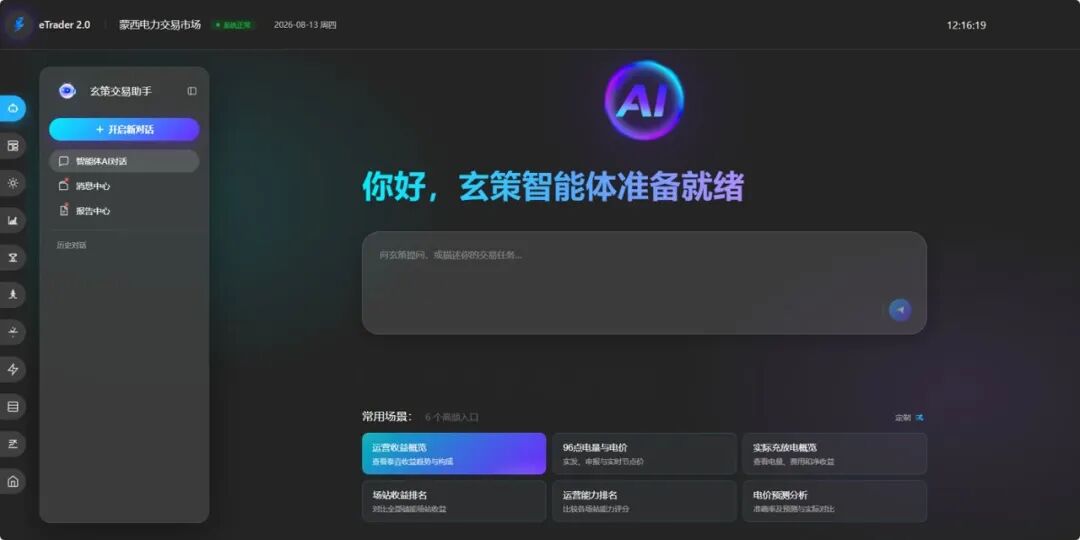
“The difficulty of spot price forecasting in the Inner Mongolia West market is very high. The industry benchmark accuracy is generally around 60% to 70%,” Wang Suitao, Deputy General Manager of Xi’an JDEnergy Yuntan Technology Co., Ltd., shared candidly during the exchange. At the same time, he pointed out that the gap in revenue performance is created precisely amid this uncertainty. “In the same region and under the same business model, some power stations perform well while others perform poorly. The difference lies in the level of operational refinement.”
This refinement is reflected in the design of charging and discharging strategies. The Dukou power station adopts a “sawtooth” charge-discharge strategy, with a daily cycle rate maintained at approximately 1.3 to 1.4 cycles. The operations team dynamically adjusts the depth and timing of charging and discharging based on grid load forecasts, fluctuations in renewable energy output, and spot market price signals. By combining AI recommendations with human judgment, the system avoids being overly conservative and missing revenue opportunities while also preventing excessive risk-taking that could result in losses.
JDEnergy’s operated energy storage capacity has now exceeded 10GWh, with operations covering key regions including Ningxia, Inner Mongolia West, and Gansu. Its operational capabilities consistently rank among the top 10 in these regional markets. Notably, third-party system integrators have already entrusted their energy storage power stations to JDEnergy for operation and management, providing an indication that its operational capabilities are not dependent on specific hardware equipment.
The Dukou project is located in Dukou County, Bayannur City, a region rich in wind and solar resources and a key area for renewable energy development in Inner Mongolia. Here, the role of the energy storage power station goes beyond smoothing the intermittency of wind and photovoltaic generation and enhancing grid regulation capabilities. It also contributes to improving renewable energy consumption and reducing wind and solar curtailment.
From a broader perspective, the significance of this GWh-scale project extends beyond the power station itself. By the end of 2025, JDEnergy’s cumulative installed capacity had exceeded 10GWh, with more than 2,000 delivered application scenarios and over 30,000 energy blocks delivered. From the birth of its first eBlock energy block in 2021 to the large-scale delivery of GWh-scale source- and grid-side projects today, JDEnergy has continued to deepen its presence in the energy storage sector, completing a critical transition from technology validation to large-scale delivery.
As Bai Yi, General Manager of JDEnergy’s Domestic Marketing Division, summarized at the closed-door session, there are more than 300,000 registered energy storage companies nationwide, but very few can integrate five capabilities into a single system: full-stack in-house R&D, integrated AC/DC design, 3S integration, intelligent operations, and project development. The Dukou project represents a concentrated test of this complete capability loop.
In front of the station’s 3D digital twin display, the reporter watched real-time data constantly change—charging power, discharging power, SOC, SOP, and more. This energy storage matrix built on the edge of the desert is communicating with the grid at millisecond-level response speeds, participating in peak and frequency regulation while delivering clean electricity to households and communities.
As the afterglow of the setting sun fell across the neatly arranged energy storage cabins, this former stretch of desert had undergone a transformation. It was no longer merely a domain of wind and sand, but a solid foundation in the wave of the energy transition. For JDEnergy, the Dukou project may be a milestone, but for China’s energy storage industry as it moves from “being buildable” toward “being operable, optimizable, and sustainable,” it offers a case worth observing over the long term.