【Xinhua Net】Exploring the Implementation of Large-Scale Energy Storage on the Desert — A Visit to the Dengkou Energy Storage Power Station

Dengkou County in Inner Mongolia is located in a region rich in renewable energy resources in China. With abundant high-quality wind power and photovoltaic resources, it serves as a key hub for renewable energy transmission from the northwest and regional green electricity consumption. It is also a core demonstration area for the construction of new power systems and the large-scale deployment of energy storage.
On August 13, the field exploration and exchange event for the Dengkou Energy Storage Project, organized by JDEnergy, was held in Wuhai, Inner Mongolia. The delegation conducted an on-site visit to the Taiyaoxin Energy Storage Power Station, a 500MW/2000MWh project delivered by JDEnergy, exploring the achievements in project construction, technological innovation, and operational performance.
String-Based Architecture Builds Safety and Efficiency Advantages
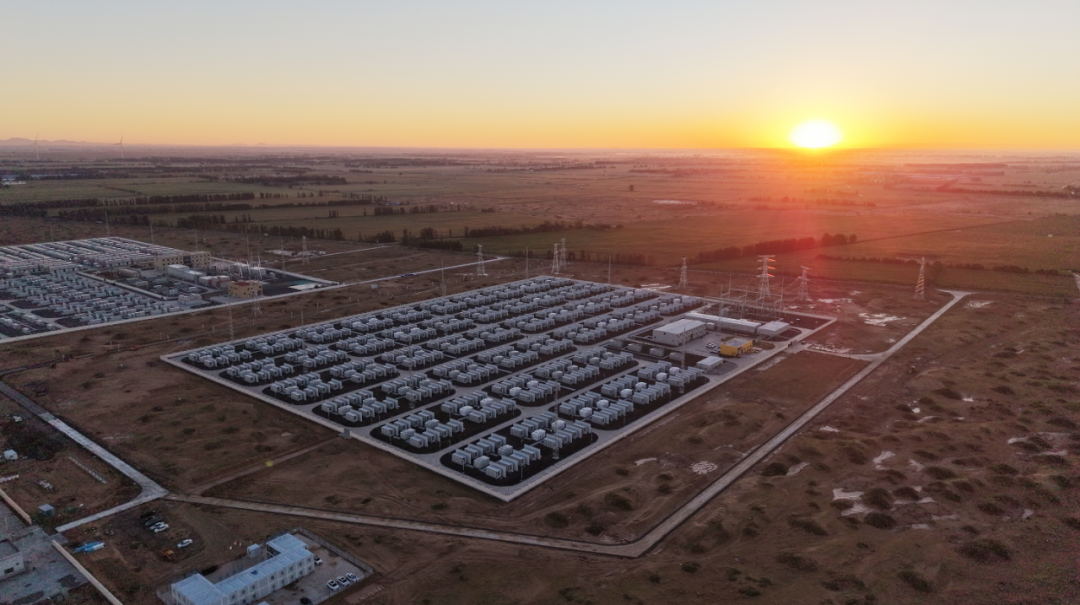
The Inner Mongolia Taiyaoxin Energy Storage Power Station is located in Dengkou County, Bayannur City. It is a key project designed to facilitate regional renewable energy consumption, enhance grid stability, and promote local economic development. With a capacity of 500MW/2000MWh, the power station is equipped with 400 string-based AC/DC integrated energy storage prefabricated cabins and 100 integrated collector and step-up units. It is also equipped with prefabricated primary and secondary power transmission and distribution facilities, with a newly built 220kV booster station connected to the Xiangtai Substation through one transmission line.
As a dedicated practitioner of string-based energy storage technology, JDEnergy has achieved the GWh-scale deployment of string-based architecture in a source-grid-side energy storage project through the Dengkou benchmark project. This project is the first GWh-level project delivered by JDEnergy and has set a new record for the scale of JDEnergy’s single project. All equipment delivery was completed within only 60 days, and full-station commissioning and “3 charge-3 discharge” verification were completed efficiently within 7 days.
The project represents the first large-scale application of JDEnergy’s flagship Galaxy-1 string-based prefabricated cabins in a source-grid-side scenario, providing support for renewable energy development in Inner Mongolia and establishing a new benchmark for large-scale, high-quality development of grid-side energy storage in China.
The power station adopts a sawtooth charging and discharging operation strategy, achieving 1.3–1.4 cycles per day. With high system availability, its operational capability has remained within the top 10% of the region over the long term. The monthly revenue of the power station consistently ranks among the top tier in the region. The revenue consists of two parts: one comes from participating in electricity market transactions and obtaining price difference revenue, while the other comes from subsidy revenue based on discharged electricity.
According to the 2025 Annual Statistics on the Electrochemical Energy Storage Power Station Industry released by the China Electricity Council, the average comprehensive efficiency of grid-side energy storage was 82.21%. However, based on the grid import and export electricity data measured at the 220kV metering point of the Taiyaoxin Energy Storage Power Station, the project’s comprehensive efficiency exceeds 88.5%, placing it among the leading levels in the industry.
Li Chen, Deputy General Manager of JDEnergy’s Marketing Division, stated that the string-based architecture eliminates circulating currents between clusters, reduces the “barrel effect,” and enables 100% depth of charge and discharge.
Combined with JDEnergy’s independently developed Battery Management System (BMS), precise full-time balancing strategy, cluster-level independent control topology, and efficient thermal management strategy, the system ensures that battery cells always operate within an appropriate environment.
Meanwhile, through its independently developed vector control algorithm, JDEnergy reduces PCS switching losses by approximately 30%. Combined with the optimal matching between PCS and battery string voltage, the overall conversion efficiency is further improved, bringing greater economic benefits to project owners and investors.
In terms of safety protection, the string-based architecture, combined with a comprehensive multi-dimensional layered protection system, establishes a strong safety foundation for large-scale energy storage.
The project is equipped with multiple levels of safety barriers. By integrating JDEnergy’s independently developed 3S (PCS/BMS/EMS) integrated control and protection technology with AI-based battery cell health management strategies, the system enables millisecond-level monitoring and early warning of thermal runaway risks.
The energy storage prefabricated cabins are equipped with PACK-level perfluorohexanone fire suppression, cabin-level aerosol fire suppression, independent cabin-level water-based fire protection systems, as well as explosion-proof and pressure-relief designs.
These measures enable the complete prevention of thermal propagation throughout the process, ensuring equipment safety.
At the same time, the independent dual-channel liquid cooling system for batteries and PCS precisely matches the heat dissipation requirements of different components, keeping battery cells in optimal operating conditions, reducing thermal losses and aging rates, and truly achieving efficient, safe, stable, and long-term operation of large-scale energy storage systems.
Refreshing the Delivery Speed of GWh-Scale Energy Storage Projects
Large-scale energy storage projects, especially GWh-level source-grid-side power stations, involve extremely high engineering challenges. They feature large equipment volumes, numerous coordination processes, complex on-site construction requirements, and strong climate constraints. The industry generally faces challenges such as long construction cycles, difficult commissioning processes, and strict quality control. Most projects of similar scale require a complete delivery cycle of 6 to 9 months. Construction delays not only increase project costs but may also result in missed opportunities arising from electricity market policies, restricting the acceleration of large-scale energy storage development.
Facing the extreme cold construction environment in Dengkou, Inner Mongolia, where winter temperatures drop below minus 20°C, as well as the massive construction scale of 400 energy storage prefabricated cabins and 100 integrated collector and step-up units, JDEnergy demonstrated strong engineering capabilities through its mature full-chain project delivery system.
Wang Yangjun, Assistant General Manager of JDEnergy and General Manager of the Engineering Center, introduced that the project took only 90 days from site preparation to full-capacity grid connection. All core equipment was delivered and installed within 60 days, while the entire station completed rigorous full-capacity “3 charge-3 discharge” commissioning verification within only 7 days.
With its outstanding efficiency, the project refreshed the delivery record of GWh-level energy storage power stations in China, providing a new pathway for the industry to accelerate project implementation and seize policy opportunities.
He stated that the core reason behind such delivery efficiency lies in JDEnergy’s advantages in engineering productization, standardized processes, and integrated construction.
Unlike the traditional energy storage project model involving scattered on-site assembly, step-by-step commissioning, and fragmented procedures, all Galaxy-1 prefabricated cabins and eLink-HV35 integrated collector and step-up units for this project were completed through integrated production, strict factory testing, and pre-commissioning at JDEnergy’s intelligent manufacturing base in Xi’an.
This enables “factory prefabrication and rapid on-site installation.” On site, only lifting, connection, and simple wiring operations are required, significantly reducing the impact of outdoor climate conditions and construction processes on project schedule and quality.
Compared with traditional models, the overall construction efficiency has improved by more than 40%.
Meanwhile, the project adopted an innovative lightweight construction solution combining pile foundations and steel platforms, which is suitable for rapid construction in undeveloped land environments and avoids the disadvantages of traditional concrete-based infrastructure, such as long construction periods and high costs.
Throughout the construction process, a multi-process parallel execution model was adopted. Equipment lifting, civil engineering work, phased commissioning, and safety inspections were carried out simultaneously.
A dedicated project task force was established to coordinate and manage the entire process, balancing construction speed, engineering quality, and safe production.
From continuous operation under extreme cold weather conditions, to precise commissioning coordination among multiple types of equipment, and finally to the successful one-time completion of full-capacity grid connection, the entire delivery system has demonstrated JDEnergy’s capabilities in large-scale energy storage project coordination, manufacturing, and engineering implementation.
It provides a high-quality engineering benchmark for the efficient construction of GWh-level energy storage projects nationwide.
Digital and Intelligent Operation Unlocks Long-Term Value
As China’s electricity spot market continues to deepen its development, the industry has entered an era of full lifecycle value competition. Under the same regional conditions and with the same project scale, the revenue gap between energy storage power stations continues to expand.
The key differentiator lies in intelligent operation and refined operation and maintenance capabilities.
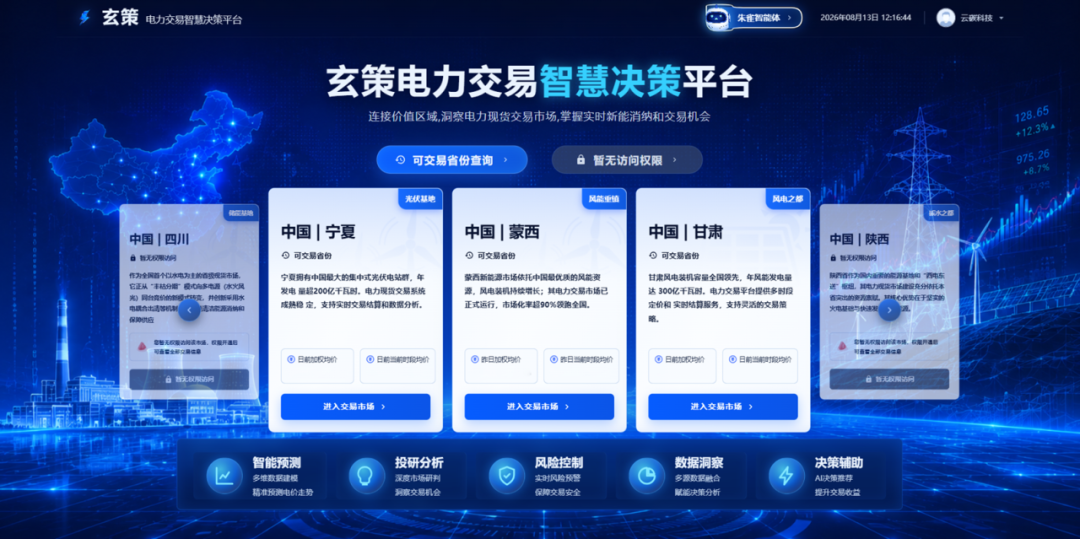
Relying on JDEnergy’s eTrader intelligent electricity trading operation platform, the system automatically generates multiple bidding strategies for the next-day electricity market and provides AI-recommended solutions.
It captures intraday peak-valley price fluctuations, monitors market supply-demand conditions and grid constraints in real time, and assists bidding decisions to reduce risks.
With the support of these capabilities, the revenue performance of the Taiyaoxin Energy Storage Power Station consistently ranks among the top tier in the region, while its comprehensive operational capability in markets such as Ningxia and Mengxi remains within the top 10% of the industry.
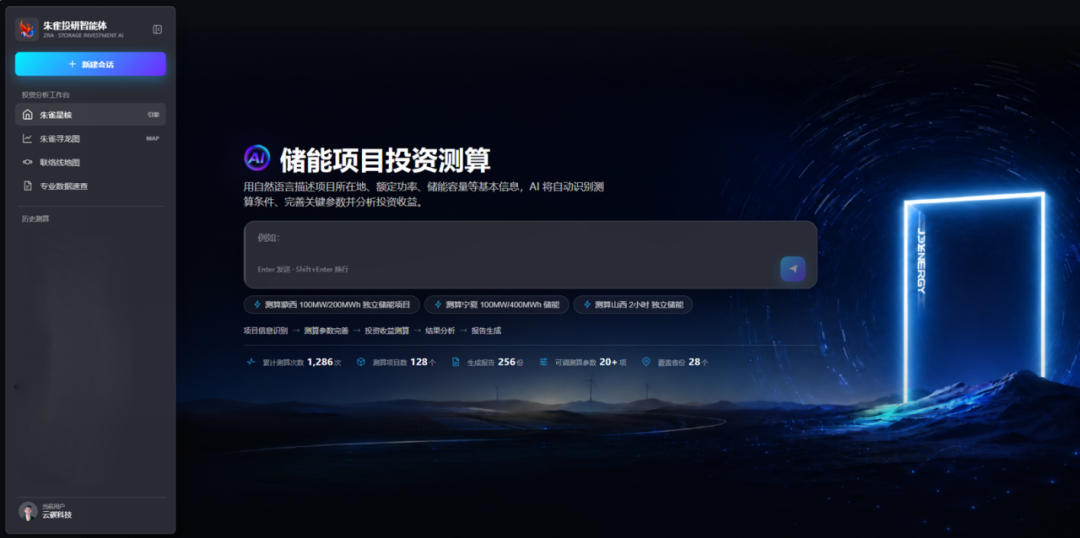
According to reports, JDEnergy has deeply integrated AI intelligent agent technology into three key scenarios throughout the full lifecycle of energy storage assets: investment decision-making, electricity trading, and intelligent operation and maintenance. It has built a digital product system centered around Zhuque Investment Decision Intelligence, Xuance Electricity Trading Intelligence, and eMind Intelligent Operation and Maintenance.
Through the coordinated operation of these three major products, JDEnergy is building an AI-driven closed loop for energy storage that covers “intelligent analysis before investment — intelligent trading after investment — intelligent operation and maintenance during operation.”
The AI intelligent agents participate throughout the entire process of perception, analysis, decision-making, and execution, driving energy storage operations from “system digitalization” toward continuous evolution in intelligence and autonomy.
“We hope that through the intelligent agent system, every kilowatt-hour of electricity can have an advantage in the trading market. By gathering more resources, we can help owners operate their assets more efficiently and ensure stable and sustainable long-term returns.”
Wang Suitao, Deputy General Manager of Xi’an JDEnergy Cloud Carbon Technology Co., Ltd., said.
Taking the desert as the testing ground and real-world results as the answer sheet, the successful implementation and stable operation of the Inner Mongolia Taiyaoxin Energy Storage Power Station, as a benchmark project demonstrating JDEnergy’s breakthrough into the GWh-scale energy storage market, provides a valuable example for the high-quality development of the new energy storage industry.
Against the backdrop of advancing the “Dual Carbon” goals, new energy storage will continue to become a key direction for improving efficiency and upgrading value within the energy storage industry in the future.
It will continue to support the secure, low-carbon, efficient, and stable development of China’s new power systems.