Webinar | Malaysia’s Energy Transition Is Underway: JDEnergy Helps You Capture the Market Momentum

01.
The Time for Energy Storage Is Now
Malaysia Is Accelerating Its Energy Transition
At the beginning of the webinar, YM Tunku Akmaludin Zakri, Vice Chairman of the Malaysia Photovoltaic and Sustainable Energy Association (MPSEA), highlighted why energy storage is becoming increasingly important as Malaysia continues to advance its energy transition.
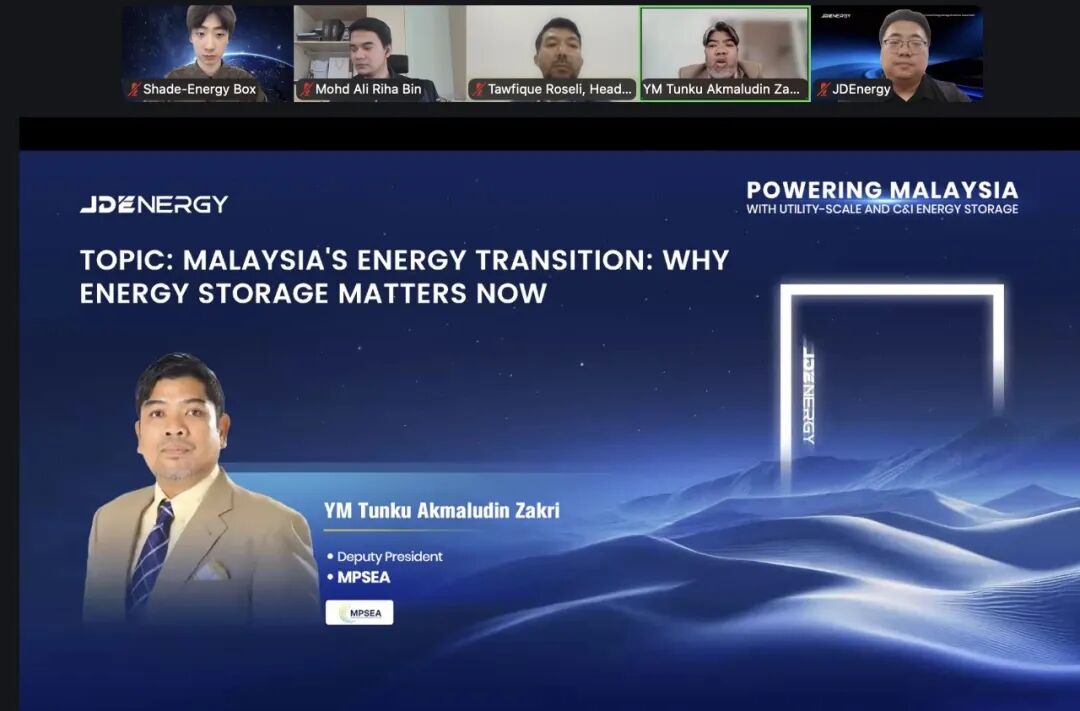
He noted that energy storage will play an important role in supporting grid stability, enhancing energy security, and enabling the integration and utilization of a higher share of renewable energy.
02.
Focus on Malaysia
Unlocking the Value of C&I and Utility-Scale Energy Storage
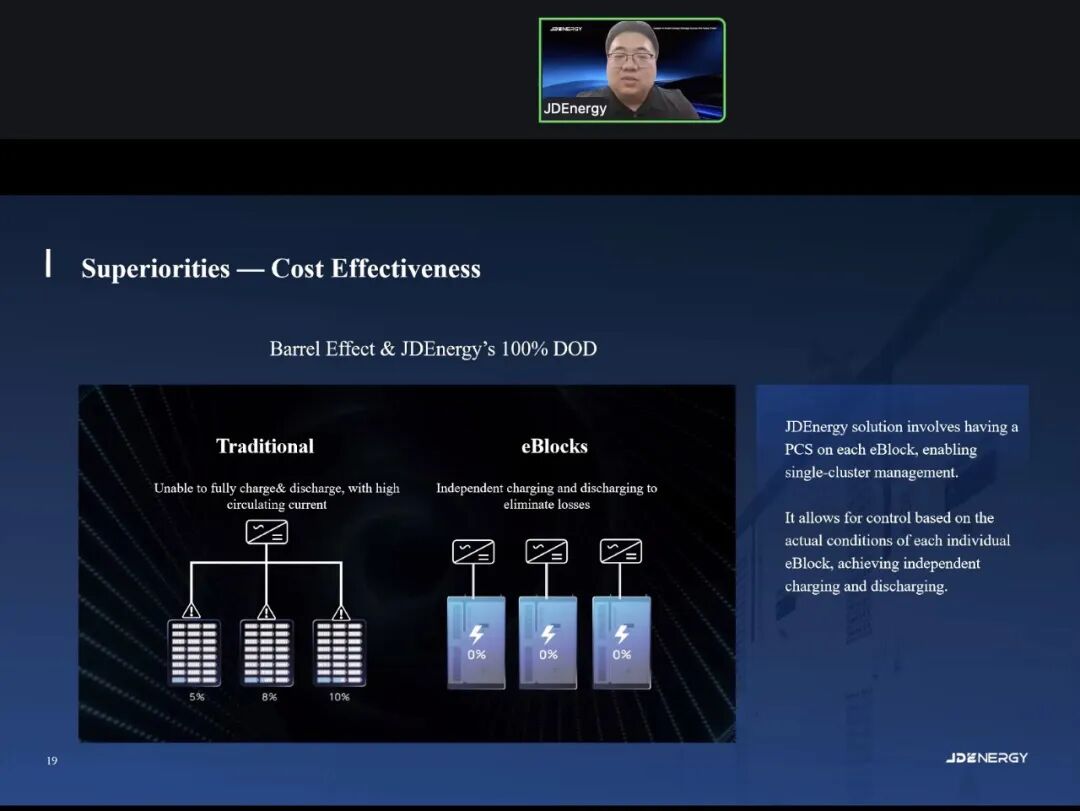
Wolfgang Tang, Senior Presales Technical Manager at JDEnergy, introduced JDEnergy’s eBlock energy storage system solution, focusing on its modular architecture, flexible deployment capabilities, and full-lifecycle value. Each eBlock is equipped with an independent PCS, enabling independent charge and discharge control, eliminating DC-side circulating currents, and supporting 100% depth of discharge (DOD) to maximize the available capacity of the energy storage system.
He further introduced several performance advantages of the architecture, including zero parallel losses throughout the entire lifecycle, an AC-side conversion efficiency of over 90% under rated operating conditions, and an annual system availability of over 99%. Meanwhile, the modular architecture isolates the impact of faults within individual modules, ensuring system availability while simplifying construction and operation and maintenance.
To date, JDEnergy solutions have been deployed in more than 10 countries worldwide, accumulating extensive practical experience across diverse application scenarios and operating environments. Its expanding global project footprint further demonstrates the scalability and adaptability of its modular architecture, enabling it to flexibly meet the needs of different markets and evolving grid requirements.
03.
Facing the Future
Exploring Opportunities, Challenges, and Pathways to Scale
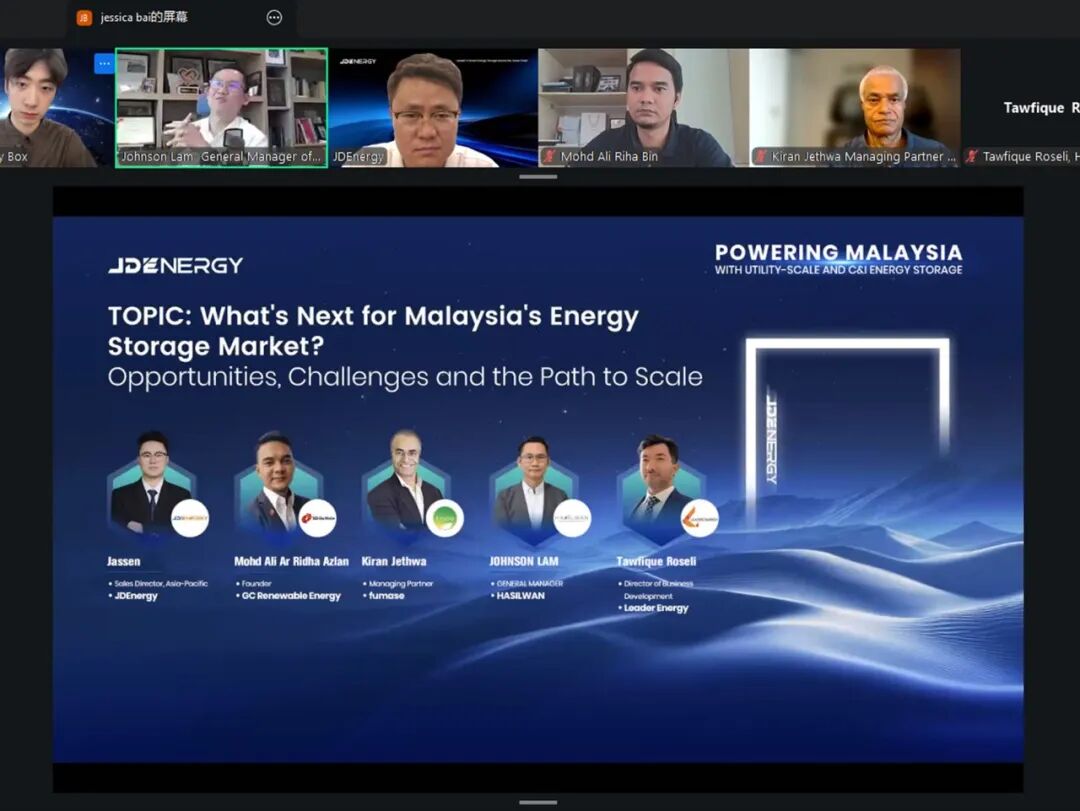
The roundtable discussion was moderated by Johnson Lam, General Manager of HASILWAN. He guided the panelists in an in-depth discussion on key topics including grid connection, MyBEST and LSS6, project financing, thermal management, full-lifecycle economics, local standards, system architecture, and future technology development.
The participating panelists included:
Jassen Su, APAC Sales Director, JDEnergy
Mohd Ali Ar Ridha Azlan, Founder, GC Renewable Energy
Kiran Jethwa, Managing Partner, Fumase
Tawfique Roseli, Business Development Director, Leader Energy
Jassen Su, APAC Sales Director at JDEnergy, shared insights into the long-term operational performance and economics of energy storage projects in Southeast Asia. He noted that the region’s high-temperature and high-humidity conditions place higher demands on thermal management, battery health, and operational reliability. Jassen Su highlighted JDEnergy’s liquid-cooling technology, which can improve cell temperature consistency and provide important support for the long-term stable operation of batteries. He also emphasized that the economics of an energy storage project should not be evaluated solely based on its initial system cost. Instead, a comprehensive assessment should be conducted over a 15- to 20-year lifecycle, taking into account system efficiency, battery degradation, downtime, operation and maintenance, and future capacity expansion requirements.
Regarding full-lifecycle management of energy storage assets, Jassen Su further introduced JDEnergy’s proprietary eMind intelligent system. By integrating data such as real-time load, electricity prices, SOC, and SOH, eMind can dynamically optimize the operating strategy of the energy storage system while continuously monitoring battery health. Through the coordination of intelligent energy management and battery health management, the system can also support predictive maintenance, further improving operational efficiency and safeguarding the long-term value of energy storage assets.
Mohd Ali Ar Ridha Azlan, Founder of GC Renewable Energy, focused on the technical and commercial complexities facing Malaysia’s emerging C&I energy storage market. He noted that the economics of different projects can vary significantly depending on their specific load profiles. For medium-voltage industrial users in particular, demand charges can account for a significant portion of overall electricity costs. In addition, evolving fire safety and construction standards remain important challenges for the market. He emphasized that the industry needs to continuously accumulate experience through early demonstration projects and further build confidence among developers, investors, and financial institutions through practical project experience.
Kiran Jethwa, Managing Partner of Fumase, pointed out that Malaysia is still in the early stages of developing its energy storage market and remains behind more mature markets such as Australia and the United States. In these mature markets, battery energy storage systems are already able to participate in relatively well-developed ancillary service markets. He noted that programs such as MyBEST and PRESS represent important steps toward integrating energy storage with renewable energy projects in Malaysia.
At the same time, he pointed out that financing remains one of the key challenges to scaling up energy storage projects. Banks and financial institutions are still evaluating risks related to battery degradation and long-term operational performance. Meanwhile, solar-plus-storage projects may help improve project bankability while optimizing the utilization of excess solar generation and addressing Malaysia’s MAAQ export restrictions.
Johnson Lam, General Manager of HASILWAN and moderator of the webinar, focused on the challenges between Malaysia’s proactive energy transition policy objectives and actual project implementation. He noted that the rapid growth of AI data centers and other energy-intensive industries is continuously increasing demand for highly reliable power supplies, further highlighting the importance of energy storage.
Tawfique Roseli, Business Development Director of Leader Energy, highlighted the role of energy storage in addressing the intermittency of solar generation and improving renewable energy utilization in Malaysia. By storing excess solar power generated during the day and releasing it during evening peak demand periods, energy storage can increase the capacity factor of solar projects from approximately 18% to around 30%–33%, while reducing curtailment and strengthening projects’ ability to address MAAQ export restrictions.
Looking ahead, he believes that ancillary service markets, including frequency regulation and capacity services, still have significant room for further development. At the same time, emerging technologies such as sodium-ion batteries may provide additional technological pathways for the long-term development of Malaysia’s energy storage market.
Outlook
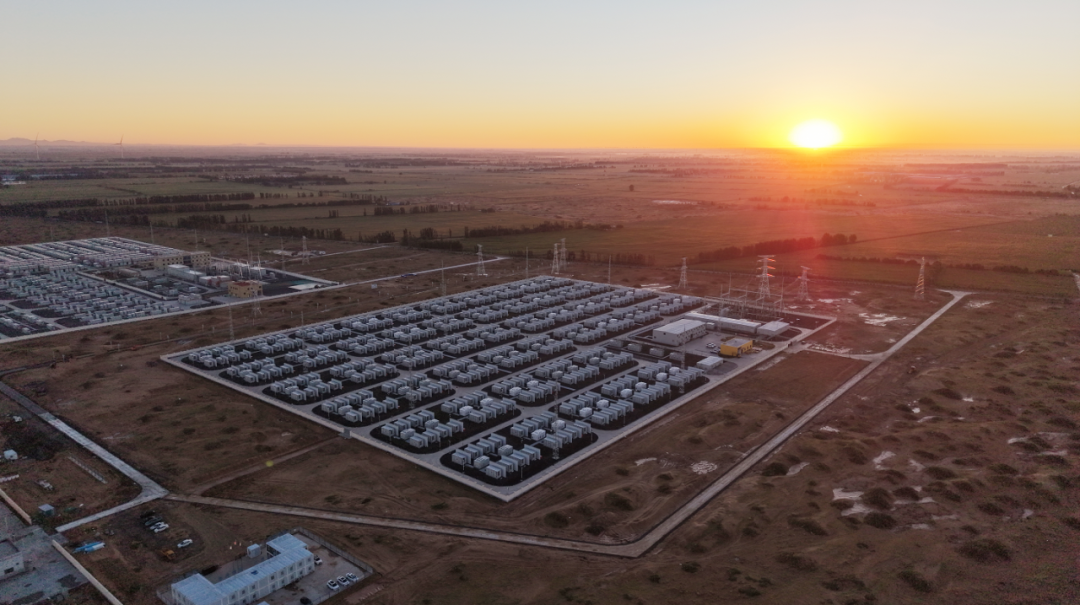
The webinar provided an in-depth discussion of the rapid development of Malaysia’s energy storage market and systematically reviewed the key opportunities and challenges facing the next stage of market development. The participating experts generally agreed that as Malaysia continues to advance its energy transition, energy storage will play an increasingly important role in facilitating the integration and utilization of solar and other renewable energy sources, enhancing grid flexibility, addressing MAAQ export restrictions, and meeting the growing demand for highly reliable power supplies.
At the same time, further improving industry standards, developing bankable business models, establishing a full-lifecycle cost assessment framework, and continuously promoting the application of advanced energy storage technologies will be key to accelerating large-scale energy storage deployment.
Looking ahead, with supportive policies such as MyBEST and LSS6 continuing to advance, market mechanisms becoming more sophisticated, and demand for both C&I and utility-scale energy storage continuing to grow, Malaysia’s energy storage market is poised to unlock greater development potential.
JDEnergy looks forward to deepening cooperation with local partners and industry stakeholders in Malaysia, working together to advance the country’s energy transition and accelerate the large-scale deployment of safe, reliable, and cost-effective energy storage solutions.