Benchmark Project | Yanchi Hanjun 150MW/600MWh Energy Storage Projec

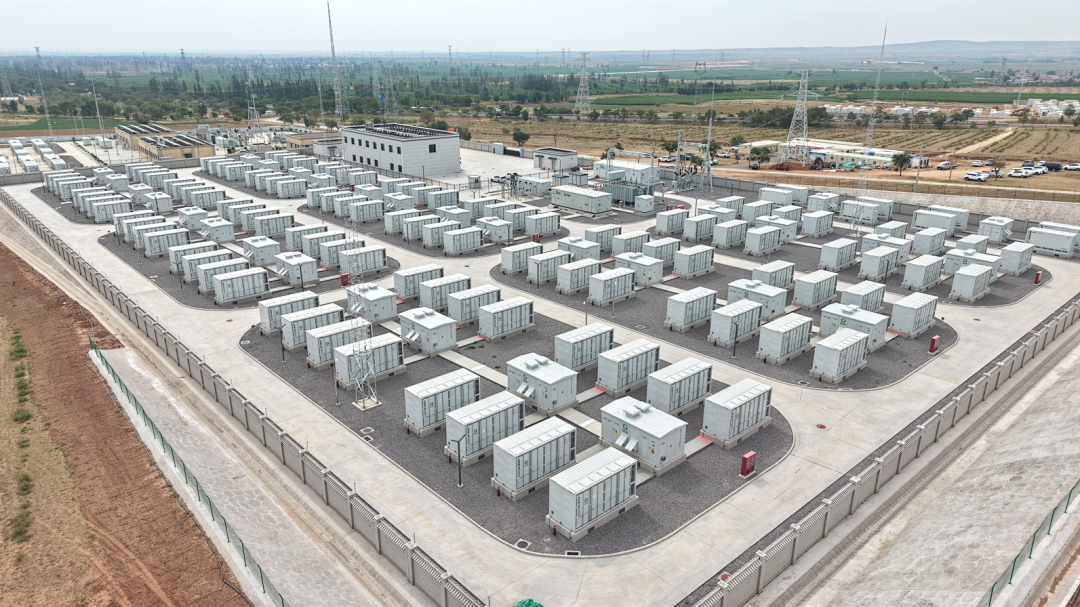
Covering approximately 50 mu of land — equivalent to around five standard football fields — the project has deployed 30 sets of 5MW/20MWh liquid-cooled energy storage units. Each unit consists of four Galaxy-1-4G units and one eLink-HV35 unit. In total, 120 JDEnergy Galaxy-1 string-based prefabricated energy storage cabins have been commissioned and put into operation.
01.
String-Based Technology Drives Efficiency Gains and O&M Transformation
In December 2025, the project successfully completed full-system grid connection and acceptance. In April 2026, it passed third-party testing and acceptance, enabling participation in the electricity market and officially entering commercial operation.
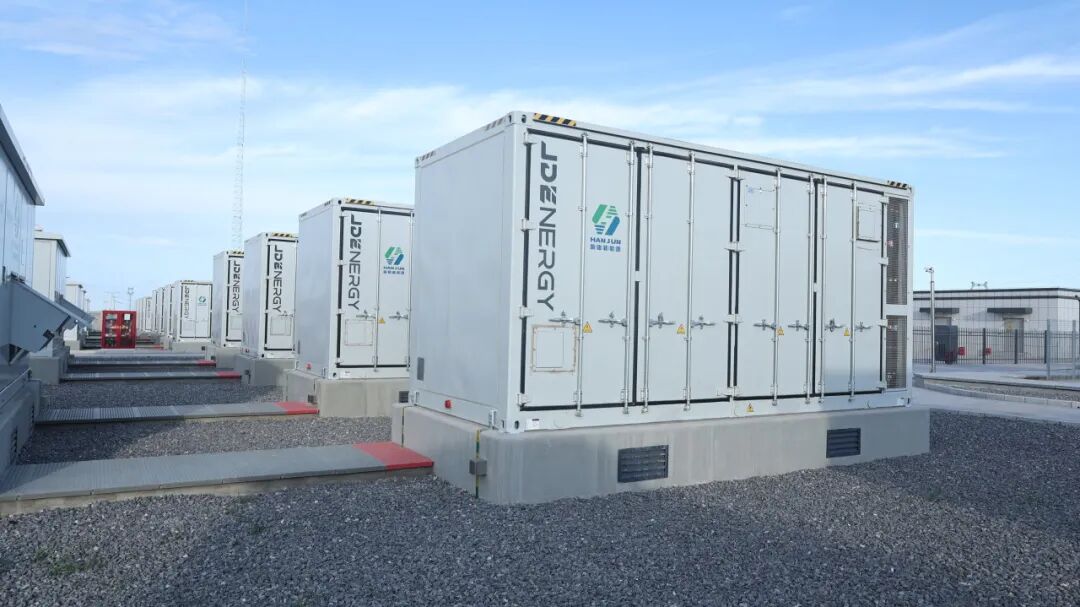
Leveraging its stable operational performance, the project has delivered strong results. In June 2026 alone, the system recorded approximately 17.8528 million kWh of charging energy and 15.6912 million kWh of discharging energy, achieving an overall system conversion efficiency of 88%. These results not only significantly outperform the industry average but also rank among the leading performance levels of comparable projects in the region.
The high operational efficiency is driven by the architectural advantages of string-based energy storage technology. Compared with centralized energy storage solutions, the string-based architecture enables independent battery cluster management, distributed power conversion, and precise control. This effectively eliminates the “weakest-link effect” caused by battery cell inconsistencies, maximizing overall energy utilization.
At the same time, the technology has brought significant improvements to operation and maintenance (O&M). As the project operator explained: “With the string-based energy storage solution, O&M has become more convenient and efficient. When an individual unit experiences an issue, the system can quickly identify the fault down to the smallest affected point. There is no need to shut down the entire station for maintenance, significantly reducing the average fault recovery time and improving overall O&M efficiency.”
02.
A Benchmark in Northwest China: Advancing Market Returns and Regional Energy Value
Through active participation in electricity market trading, the project has established a clear and sustainable revenue model. According to the project manager: “Monthly revenue is approximately RMB 6 million, annual revenue is expected to reach around RMB 72 million, and annual discharge energy is projected to exceed 150 million kWh.”
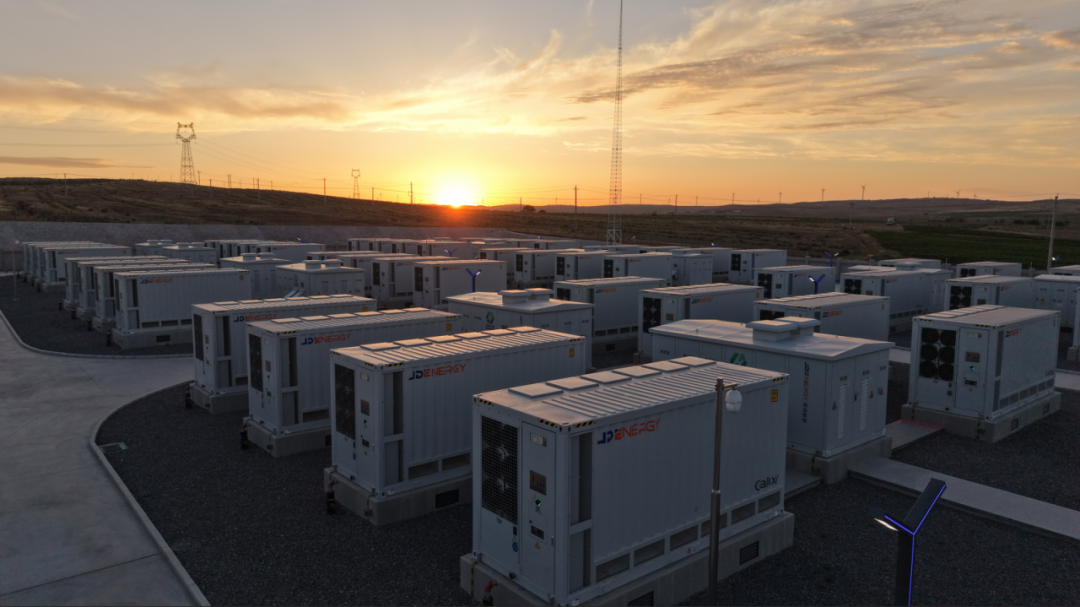
The project not only delivers significant economic returns for investors but also creates broader strategic value for regional energy development.
As a region with a high penetration of renewable energy, Ningxia is facing increasing challenges in grid flexibility, including peak shaving and frequency regulation. By effectively smoothing fluctuations from renewable power generation, the energy storage station has significantly improved grid security and renewable energy utilization. It is also supporting the large-scale development of clean energy resources such as wind and solar power, continuously contributing to regional energy transition and the development of a new-type power system.
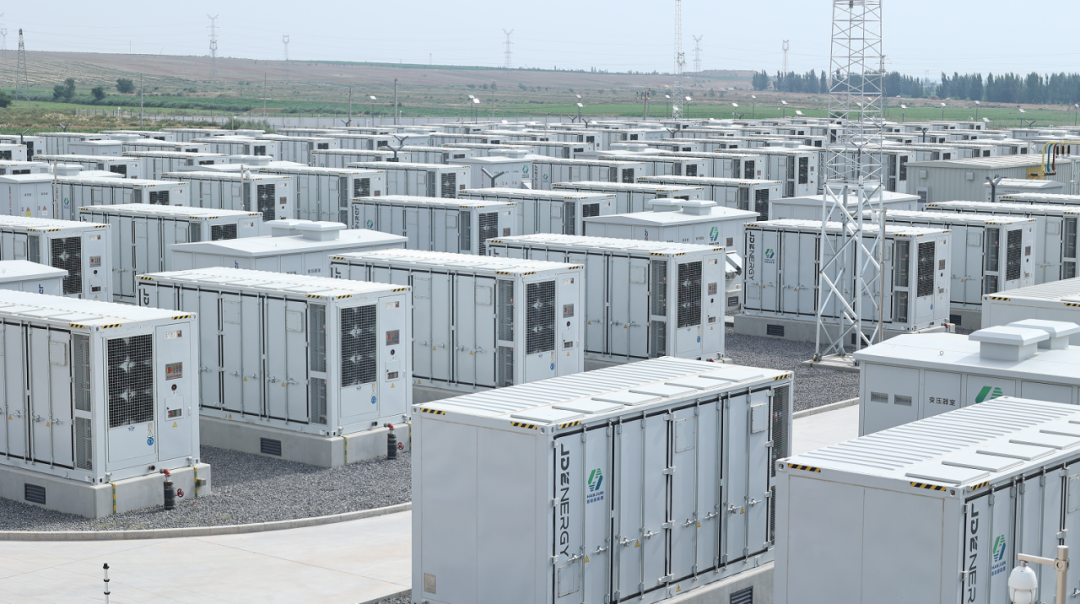
The Yanchi Hanjun 150MW/600MWh Energy Storage Project demonstrates the advantages of string-based energy storage solutions in large-scale applications through real-world operational data. It highlights the critical role of energy storage as a stabilizer and regulator for the new-type power system, while providing a replicable and scalable reference model for standalone energy storage projects in China. The project continues to support the high-quality development of the global energy storage industry.